

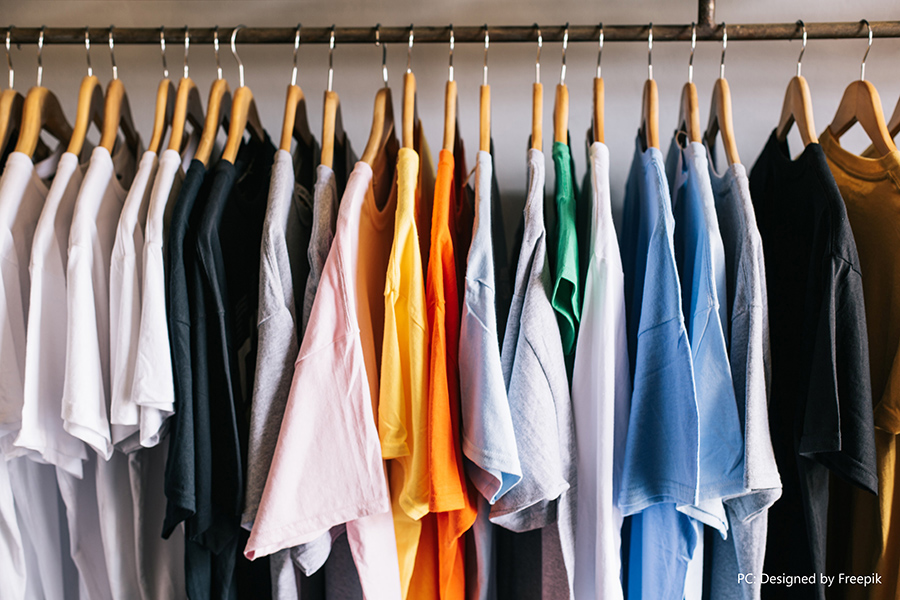
Fashion, designed by Freepik
Fashion industry executives are now focusing on crisis management, but eventually must shift to reimagine the industry in the post-COVID-19 world, suggests management consulting firm McKinsey & Company. “It’s time to rewire the fashion system,” states McKinsey & Company’s ‘The State of Fashion 2020: Coronavirus Update,’ report.
Even before COVID-19 disrupted financial markets, upended supply chains and crushed consumer demand across the global economy, fashion industry leaders were not optimistic about 2020. Fashion industry executives had expressed pessimism across all geographies and price points in McKinsey & Company annual report, ‘The State of Fashion 2020’. Fast forward a few months, now fashion industry’s outlook has become dramatically bleaker. The industry is now on red alert, cautions McKinsey & Company.
While COVID-19 is impacting every industry – from finance to hospitality – fashion is particularly vulnerable because of its discretionary nature. The average market capitalisation of apparel, fashion and luxury players dropped almost 40% between the start of January and March 24, 2020 —a much steeper decline than that of the overall stock market.
McKinsey & Company estimates that revenues for the global fashion industry – including apparel and footwear sectors – will contract by –27 to –30% in 2020 year-on-year. However, the industry could regain positive growth of 2-4% in 2021, compared with the 2019 baseline figure.
For the personal luxury goods industry – including fashion, accessories, watches, jewelry and high-end beauty – a global revenue contraction of –35 to –39% in 2020 year-on-year is expected. But there could be positive growth of 1-4% in 2021, compared with the 2019 baseline figure.
If stores remain closed for two months, McKinsey & Company analysis approximates that 80% of publicly listed fashion companies in Europe and North America will be in financial distress. Combined with the McKinsey Global Fashion Index (MGFI) analysis, which found that 56% of global fashion companies were not earning their cost of capital in 2018, the consulting company expects a large number of global fashion companies to go bankrupt in the next 12-18 months.
Although the duration and ultimate severity of the pandemic remains unknown, it is apparent that the fashion industry is just at the beginning of its struggle. By causing blow after blow to both supply and demand, the pandemic has brewed a perfect storm for the industry. A highly integrated global supply chain means that companies have been under immense strain as they have tried to manage crises on multiple fronts as lockdowns were imposed in rapid succession, halting manufacturing in China first, then Italy, followed by countries elsewhere around the world.
A freeze on spending is aggravating the supply-side crisis. Widespread store closures for an industry reliant on offline channels, coupled with consumer instinct to prioritise necessary over discretionary goods, hit brands’ bottom lines and depleted cash reserves. Even online sales have declined 15-25% in China, 5-20% across Europe and 30-40% in the United States.
Also read: Closets of the future
The COVID-19 pandemic also presents the fashion industry with a chance to reset and reshape the industry’s value chain completely – and an opportunity to reassess the values by which it measures actions. “We expect that themes of digital acceleration, discounting, industry consolidation and corporate innovation will be prioritised once the immediate crisis subsides. Even after witnessing waves of insolvencies, industry leaders will need to get comfortable with uncertainty and ramp up future-proofing efforts as the potential for further outbreaks and lockdowns loom.”
This will also be a time for collaboration within the industry – even among competing organisations, suggests McKinsey & Company. No company will get through the pandemic alone, and fashion players need to share data, strategies and insights on how to navigate the storm. Brands, suppliers, contractors and property owners should also find ways to share the burden.



Watsons to open 20 new stores in the GCC
In 2020, global health & beauty retailer AS Watson Group signed its
April 29, 2024 | By Rupkatha BAsda and Deliverect Deepen Partnership to Power Rapid Delivery Across Asda Express
SQUATWOLF’s Kuwait Flagship Store Anchors Its Regional Growth Ambitions
/ 
For decades, Haldiram’s built deep recall across the UAE through its packaged

When House of Habanero opened its first physical location at Alserkal Avenue

Union Coop has completed a significant expansion of its Hatta Souq branch,

Saudi Arabia is set to welcome U.S. food exporters this week, as

Majid Al Futtaim has officially entered the discount retail segment with the

As convenience increasingly becomes currency in the region’s grocery landscape, Union Coop

As wellness becomes a lifestyle in the UAE, the grocery aisle is

Grandiose, one of the leading grocery retailers in the UAE with a

With shifting consumer behaviour, rising cost pressures, regulatory changes, and rapid digitization,

Union Coop’s blend of retail expansion, digital innovation, and community focus is

Abu Dhabi-based MAIR Group has marked a pivotal stage in its transformation

In a move that blurs the line between shopping and investing, Apparel
/ 
Zuvees believes the future of gifting won’t be won through bigger catalogues

Why cinemas, wellness sanctuaries and cultural districts are becoming emotional infrastructure for

In a retail landscape dominated by shelves stacked with finished products, Oo

Pure Gold Jewellers, one of the region’s leading jewellery retail brands, today

Ulta Beauty’s arrival in the Middle East is not simply another international

European denim powerhouse JACK & JONES is making a decisive return to

From bullion to boutiques, investment to immersion, Dubai Gold District marks a
The opening of New Balance’s first-ever Grey store in the Middle East





 Previous Article