
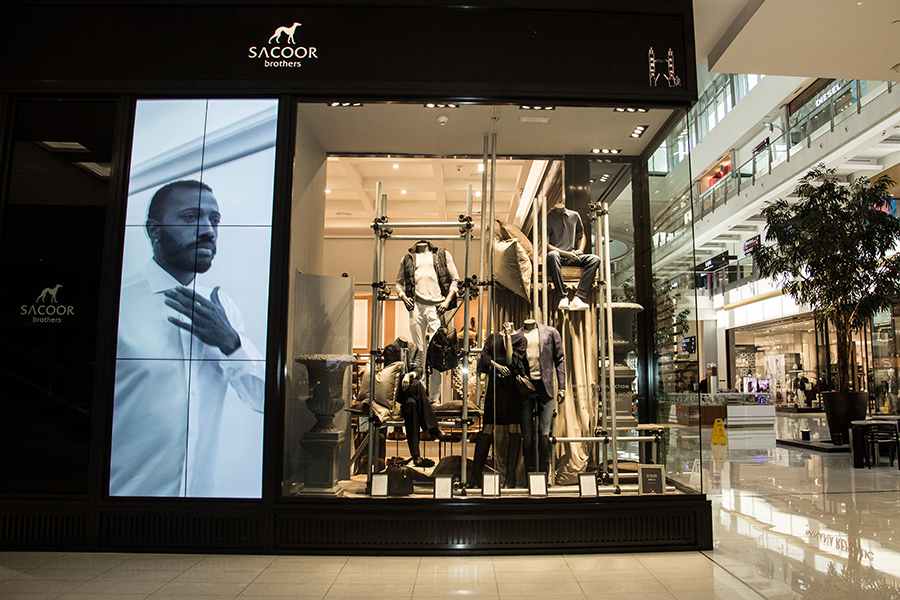
Sacoor Brothers, The Dubai Mall
“Traditionally, fashion has always been a very ‘likeable’ segment within retail,” opines Bart Denolf, CEO – franchise for Sacoor Brothers. “While it may not be an essential category during a pandemic, as life goes back to normal, people will buy fashion items.”
What, how and where they buy fashion might evolve, aligned to the ‘next normal’ consumption behaviour.
Staying with ‘normal’, Denolf feels it may take 12-18 months for fashion businesses to see some semblance of normalcy, which will differ from one region to another. This might also depend on the possibility of subsequent waves in the spread of the virus and how that is controlled.
Also read: We can expect normalcy by Q1 2021
As such, businesses around the world are undertaking all possible measures to future-proof. For Sacoor Brothers, three areas – accelerating digitalisation, being lean and deepening the social impact – will be crucial for future-proofing the business. “We will increase our digital footprint. We are planning to become leaner in certain areas of the workforce and focus on deepening a sustainable core. In addition, we are also taking a closer look at our financial forecasts,” Denolf elaborates.
Navigating the storm
It was impossible to prepare for an unprecedented crisis like the COVID-19 pandemic. However, businesses with strong fundamentals and the ability to quickly readjust have stayed resilient while navigating the storm.
“The crisis required businesses to react in a phased manner – from immediate action through the creation of contingency plans to a resilience building, followed by reopening and finally plan for the ‘new normal’,” Denolf outlines.
Having a presence in Asia somewhat helped Sacoor Brothers to prepare for the “unexpected” in the Middle East.
“We saw how quickly countries – leave aside businesses – were going under lockdown in Asia. We realised the possibility of a ripple effect, before the pandemic hit Europe and the Middle East. In a way, this helped us to prepare, especially in terms of inventory management. By the time the pandemic hit the region, we had already received stock, which was beneficial and didn’t challenge our supply chain. Having said that, we also started talking to our suppliers in advance, towards the beginning of February, about deferment and minimal cancellation. The key in current relationships is collaboration among partners, suppliers and us to emerge stronger from the crisis,” he explains.
Smart management of inventory
As a result of temporary store closures, retail brands have been seen to engage in discounting strategies, which isn’t necessarily a healthy way of moving inventory.
“The crisis has taught fashion businesses to be creative, moving collections seamlessly from one season to another. We too have tried to move collections between seasons, which seems to be a smart and sustainable strategy,” Denolf points out. “While this will possibly work better in Europe, it is also relevant in the Middle East, boasting a fashion-and-travel savvy population. Of course, travel is restricted at the moment, but soon things will ease up and people in the region will look for winter collections as they travel to colder countries, which we have available at Sacoor Brothers.”
Amidst the pandemic, people were probably not purchasing formalwear. How did that impact a brand like Sacoor Brothers?
“As people stayed at home, fashion segments like formalwear were impacted,” Denolf agrees. “We were agile in our reaction to this changing consumption pattern, facilitated by our casualwear and sportswear ranges.”
Rethinking brick-and-mortar
The temporary closure of brick-and-mortar stores led to significant losses for retailers. A KPMG report, in fact, indicated that 15% of retail doors in the UK will not be able to reopen, post-pandemic.
In this context, Denolf observes, “As retailers, we will re-shift the map of our retail doors, with smarter ways of expansion. A lot of the decisions will depend on the tenant-landlord relationship too – how both stakeholders support each other.”
This is quite obvious considering that rent is one of the biggest overheads for retailers.
“From deferring to waiving off payments, shopping malls in every country followed a different approach. A lot of shopping malls are also moving towards a turnover rent model, which might be more realistic for the future. The crisis has reinforced the importance of ‘cash is king’ principle. Businesses will look for flexibility to safeguard against such enormous crises in the future,” Denolf states.
Online is an enormous opportunity
The online channel, on the other hand, thrived. Sacoor Brothers also saw substantial growth online. “Going forward, we will focus on increasing our digital footprint,” Denolf reaffirms. “The supply chain also needs to be more seamless.”
“The crisis did accelerate a lot of company goals, digitalisation being one. At Sacoor Brothers, as the stores closed down temporarily, we redeployed our store staff to handle online orders that saw a spike. Think about it, fashion businesses have seen anywhere from 3-13X growth in online orders – via their own e-commerce sites and marketplaces. Were the businesses completely prepared to handle such a spike? Not really! But we did our best. For example, we quickly added a feature on our online channel that allowed customers to measure themselves before placing an order. There were delays in delivery, particularly during the lockdown; but despite all odds, online has proved to be an enormous opportunity for fashion businesses,” he adds.
Safety is a crucial part of the retail experience
In a post-pandemic world, safety has become a crucial part of the retail experience – be that in-store or online. Sacoor Brothers stores, for instance, are built as experiential spaces, coupled with great customer service. From someone playing the piano to serving Nespresso coffee to offering tailoring and concierge services – all these are part and parcel of a Sacoor Brothers store.
“We have had to temporarily discontinue serving Nespresso coffee at our stores, in line with governmental guidelines and rightly so,” Denolf shares. “At this point, ensuring the highest level of safety for our people – including staff and customers – is our primary focus, as our stores have reopened. While abiding by safety guidelines, we are offering our regular services – wherever possible.”
“Importantly, employees lie at the heart of our business. They are our biggest assets. More than ever before, we have to ensure the overall wellbeing of our employees during the pandemic. If we expect them to have the same passion as before, as we work towards regaining momentum, we have to take care of them in the best possible manner too,” he concludes.
For all the latest retail news from the Middle East, follow us on Twitter and LinkedIn, like us on Facebook and subscribe to our YouTube page.


Watsons to open 20 new stores in the GCC
In 2020, global health & beauty retailer AS Watson Group signed its
April 29, 2024 | By Rupkatha BLandmark Group’s ‘Circulife’ could be a “giant leap” towards UAE’s textile circularity goals
“We want to not just match the price; but beat it,” claims Chemist Warehouse CEO
Landmark Group to invest $1-bn to grow the business, open 400 stores
/ 
For decades, Haldiram’s built deep recall across the UAE through its packaged

When House of Habanero opened its first physical location at Alserkal Avenue

Union Coop has completed a significant expansion of its Hatta Souq branch,

Saudi Arabia is set to welcome U.S. food exporters this week, as

Majid Al Futtaim has officially entered the discount retail segment with the

As convenience increasingly becomes currency in the region’s grocery landscape, Union Coop

As wellness becomes a lifestyle in the UAE, the grocery aisle is

Grandiose, one of the leading grocery retailers in the UAE with a

With shifting consumer behaviour, rising cost pressures, regulatory changes, and rapid digitization,

Union Coop’s blend of retail expansion, digital innovation, and community focus is

Abu Dhabi-based MAIR Group has marked a pivotal stage in its transformation

In a move that blurs the line between shopping and investing, Apparel
/ 
Zuvees believes the future of gifting won’t be won through bigger catalogues

Why cinemas, wellness sanctuaries and cultural districts are becoming emotional infrastructure for

In a retail landscape dominated by shelves stacked with finished products, Oo
Asda, the UK’s third-largest grocery retailer, has strengthened its partnership with Deliverect

Pure Gold Jewellers, one of the region’s leading jewellery retail brands, today

Ulta Beauty’s arrival in the Middle East is not simply another international
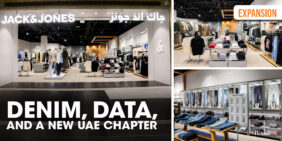
European denim powerhouse JACK & JONES is making a decisive return to

From bullion to boutiques, investment to immersion, Dubai Gold District marks a





 Previous Article