
Retail has always been obsessed with location. For decades, success was measured by the address on the storefront. Prime mall locations commanded premium rents because visibility translated into footfall, and footfall translated into sales. Retail strategy revolved around attracting customers to a physical destination.
That equation no longer holds. Today’s consumer can order groceries before breakfast, book a home massage during lunch, schedule a car service for the afternoon and have a healthcare professional visit in the evening, all without leaving home. Yet those very same consumers will willingly spend an hour driving across the city for a child’s birthday celebration, a live music workshop or an immersive entertainment experience.
The shift isn’t from physical to digital. Nor is it from stores to apps. It is from obligation to intention.
Consumers have become remarkably selective about where they spend their time. Every journey now has to justify itself. If the experience doesn’t offer something meaningful, educational, emotional or memorable, the expectation is increasingly simple: bring it to me instead.
Across conversations with leaders in family entertainment, luxury wellness, music retail and home services, one striking pattern emerged. Although they operate in entirely different industries, they are all redesigning their businesses around the same consumer reality.
The storefront is no longer fixed. It moves to wherever the customer finds the greatest value.
Consumers Are No Longer Buying Products. They’re Buying Better Use of Their Time.
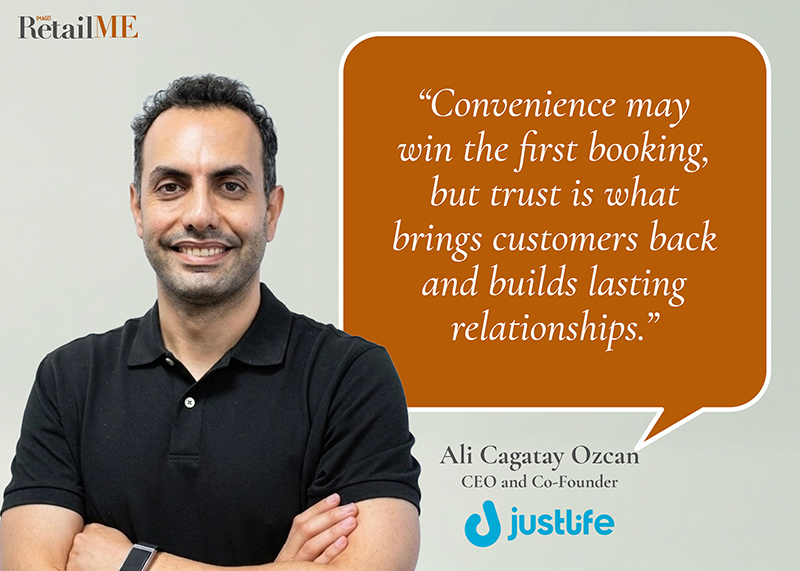
Ask any retailer what consumers value today and convenience will almost certainly feature in the answer. But convenience alone no longer explains changing consumer behaviour. For Ali Cagatay Ozcan, CEO and Co-Founder of Justlife, the bigger shift is how consumers think about time itself: “People are busier than they’ve ever been, balancing work, family and everything in between, and time has become one of the most valuable things they have.”
That observation explains why Justlife has expanded beyond home cleaning into wellness, healthcare and automotive services. The ambition, Ozcan says, has never been to build a catalogue of services. It has been to remove friction from people’s daily lives.
“Customers aren’t necessarily looking for more,” he explains. “They’re looking for things that fit naturally into their day and reduce the amount of effort required to get everyday tasks done.”
Interestingly, that same philosophy is reshaping one of retail’s oldest categories: luxury. For decades, luxury brands built value by asking customers to enter carefully curated spaces. Marble floors, elegant interiors and prestigious addresses were all part of the promise.
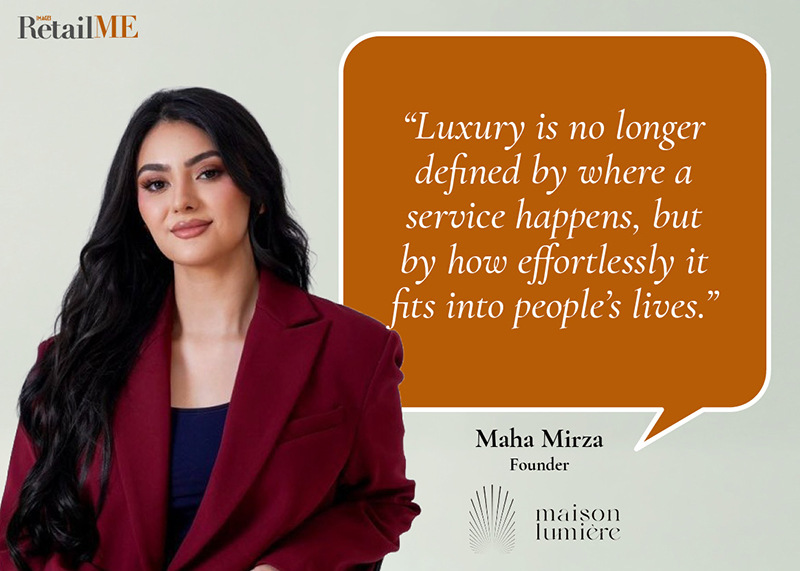
Today, according to Maha Mirza, Founder of Maison Lumière, the relationship has reversed.
“Time has become the ultimate luxury.” Instead of asking customers to travel, Maison Lumière brings luxury wellness into their homes.
“Luxury is no longer defined by where a service takes place,” Mirza says. “It is defined by how a service makes people feel.” She believes consumers are increasingly investing in experiences that fit seamlessly into their lives rather than interrupt them.
“Consumers are paying for time. They’re paying for convenience. They’re paying for privacy. Ultimately, they’re paying for how a brand makes them feel.” Yet not every category should eliminate the journey.
Sometimes, the journey is precisely the point. For Pratik Patwari, Co-founder of Loco Bear, success isn’t measured by how close the destination is.
It’s measured by whether families believe it’s worth travelling to. “The question isn’t whether a family will drive thirty minutes,” he says. “It’s whether we’re the reason they plan their weekend.”
Likewise, Jamal Mohamed, CEO of Desert Beat, doesn’t believe people visit music retail spaces to buy equipment they could order online. “People don’t simply want to purchase equipment anymore,” he says. “They want to discover something new, learn a skill, meet like-minded people and leave feeling inspired.”
Different sectors. Different business models. The same underlying truth. Consumers are no longer deciding whether to spend time. They’re deciding where that time creates the greatest value.
Perhaps the biggest mistake retailers can make today is assuming physical presence alone creates relevance. It doesn’t. The experience has to earn the journey.
Patwari believes many operators still confuse destination with scale.
“People often confuse a destination with a large venue. They’re not the same thing. A big venue gets you one visit. A brand families trust gives them a reason to keep coming back.” That distinction is becoming increasingly important as the GCC invests billions in entertainment, mixed-use developments and lifestyle destinations.
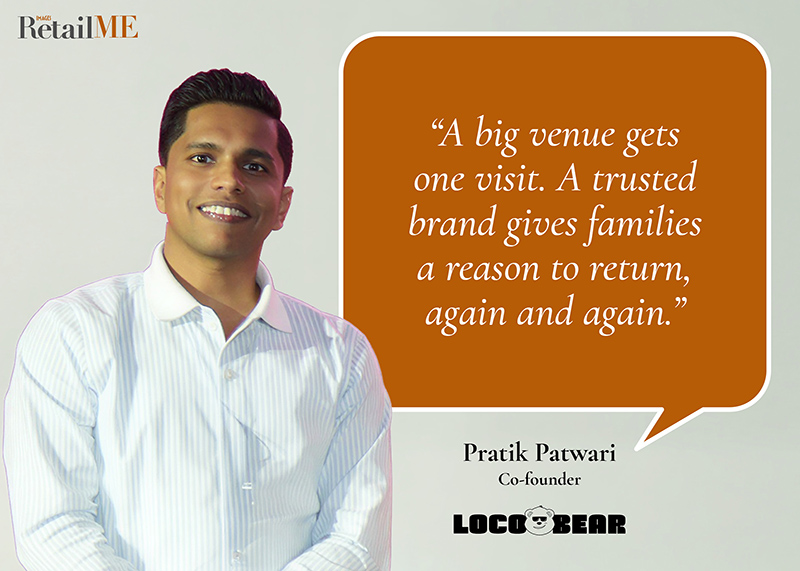
Consumers may visit out of curiosity once. Returning requires something far deeper.
“Technology can be copied. Games can be copied,” Patwari says. “What can’t easily be copied is the trust families place in your brand, the quality of your hospitality and the consistency of your execution.”
Mohamed sees a similar evolution taking place in music.
Consumers already have unlimited access to content. Physical spaces therefore need to deliver what digital platforms cannot.
“Physical destinations give people the opportunity to connect, discover new artists, exchange ideas and be part of something bigger than themselves.” That philosophy shaped Desert Beat’s collaboration with AlphaTheta.
Rather than creating another showroom, the ambition was to create a place where customers actively participate. “The journey starts with your first steps into the world of DJing and can take you all the way to stardom.”
For both businesses, products are almost incidental. The real offering is belonging.
Yet Mirza argues there are categories where the destination itself adds little value.
Luxury wellness, she believes, should adapt to customers rather than asking customers to adapt to luxury. “The future of luxury lies not in asking customers to enter a brand’s world, but in thoughtfully entering theirs.”
Ozcan reaches the same conclusion from a completely different angle. Routine tasks, he argues, shouldn’t consume valuable time. “People will always want reasons to leave the house,” he says. “Shopping, dining and spending time with family aren’t going anywhere.”
But some journeys have simply outlived their purpose. “Nobody is nostalgic for the waiting room or the queue at the garage.”
The implication is profound. Retail is no longer deciding where business happens. Consumers are.
Across all four conversations, another word kept surfacing. Not convenience. Not experience. Trust.
When asked what families actually pay for, Patwari dismisses the industry’s favourite answers.
“People say experiences or memories. Those are outcomes.” His answer is far more revealing.
“What families are actually paying for is certainty.” Parents, he explains, aren’t booking bowling lanes or laser tag arenas. “They’re trusting us with one of the most important days of their child’s year.”
That same logic appears throughout Justlife’s business. Convenience may generate the first booking. Consistency creates the second.
“Technology can make the booking seamless,” Ozcan says, “but it’s the person who shows up that decides whether someone trusts you enough to book again.”
Luxury follows the same pattern. Mirza argues that memorable experiences are becoming one of the strongest differentiators because products and even services can be copied. “Experiences are much harder to duplicate.” Consumers increasingly reward brands that remove friction while maintaining exceptional standards.
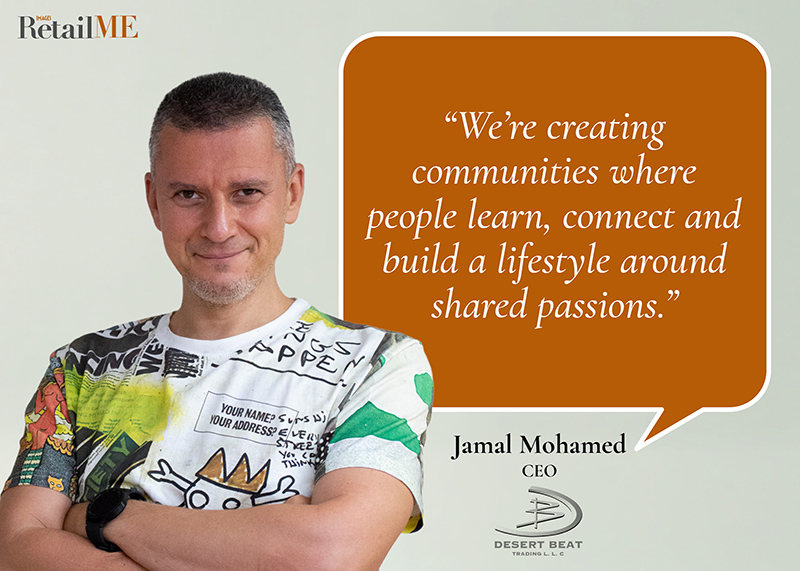
Mohamed believes retail spaces succeed for the same reason.
“We’re no longer selling a product or a service,” he says. “We’re promoting a lifestyle.” When customers feel part of something larger than the transaction itself, loyalty becomes less about price and more about identity.
Across four different industries, trust appears in different forms. For families, it is certainty. For luxury, it is discretion. For home services, it is reliability. For music, it is belonging.
For years, the retail industry asked whether digital would replace physical stores. That now feels like the wrong question. The real question is whether the customer should make the journey at all. If the answer is yes, the destination must offer something impossible to replicate elsewhere: community, inspiration, celebration, learning, or genuine human connection.
If the answer is no, the smartest brands will remove every unnecessary step between intention and experience. The storefront is no longer a place. It is a promise. Sometimes that promise invites customers to make the journey. Increasingly, it honours their time by ensuring they never have to.


Watsons to open 20 new stores in the GCC
In 2020, global health & beauty retailer AS Watson Group signed its
April 29, 2024 | By Rupkatha BBeyond the Bouquet: Why Trust Is Becoming the New Currency of Gifting
From a Single Coffee Machine to a Regional Coffee Empire: The Coffee Planet Story
“If not me, then who?” — Inside Luved, the UAE’s New Pre-Loved Marketplace
/ 
For decades, Haldiram’s built deep recall across the UAE through its packaged

When House of Habanero opened its first physical location at Alserkal Avenue

Union Coop has completed a significant expansion of its Hatta Souq branch,

Saudi Arabia is set to welcome U.S. food exporters this week, as

Majid Al Futtaim has officially entered the discount retail segment with the

As convenience increasingly becomes currency in the region’s grocery landscape, Union Coop

As wellness becomes a lifestyle in the UAE, the grocery aisle is

Grandiose, one of the leading grocery retailers in the UAE with a

With shifting consumer behaviour, rising cost pressures, regulatory changes, and rapid digitization,

Union Coop’s blend of retail expansion, digital innovation, and community focus is

Abu Dhabi-based MAIR Group has marked a pivotal stage in its transformation

In a move that blurs the line between shopping and investing, Apparel
/ 
Hamat announces the signing of a 10-year agreement with Ground Control Entertainment
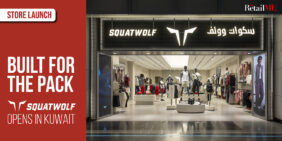
SQUATWOLF has opened its first standalone store in Kuwait at The Avenues,

Keto Kartel has entered the UAE’s premium wellness food space at a

With the signing of a landmark partnership between Wafi Group and ALMAD

Under the patronage of His Royal Highness Prince Saud bin Mishaal bin
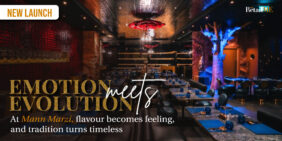
Inside Dubai’s newest culinary theatre where memory, art, and modern craft come
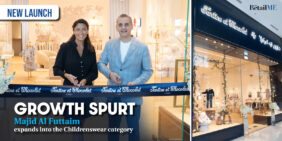
Majid Al Futtaim is strengthening its lifestyle portfolio with a move into

Liali Fine Jewellers is a Dubai-based jewellery brand established in 1999. Over

The entrepreneurial journey from a single outlet to a multi-location empire is

From frictionless checkouts to AI-powered inventory, retail’s digital backbone took center stage





 Previous Article