

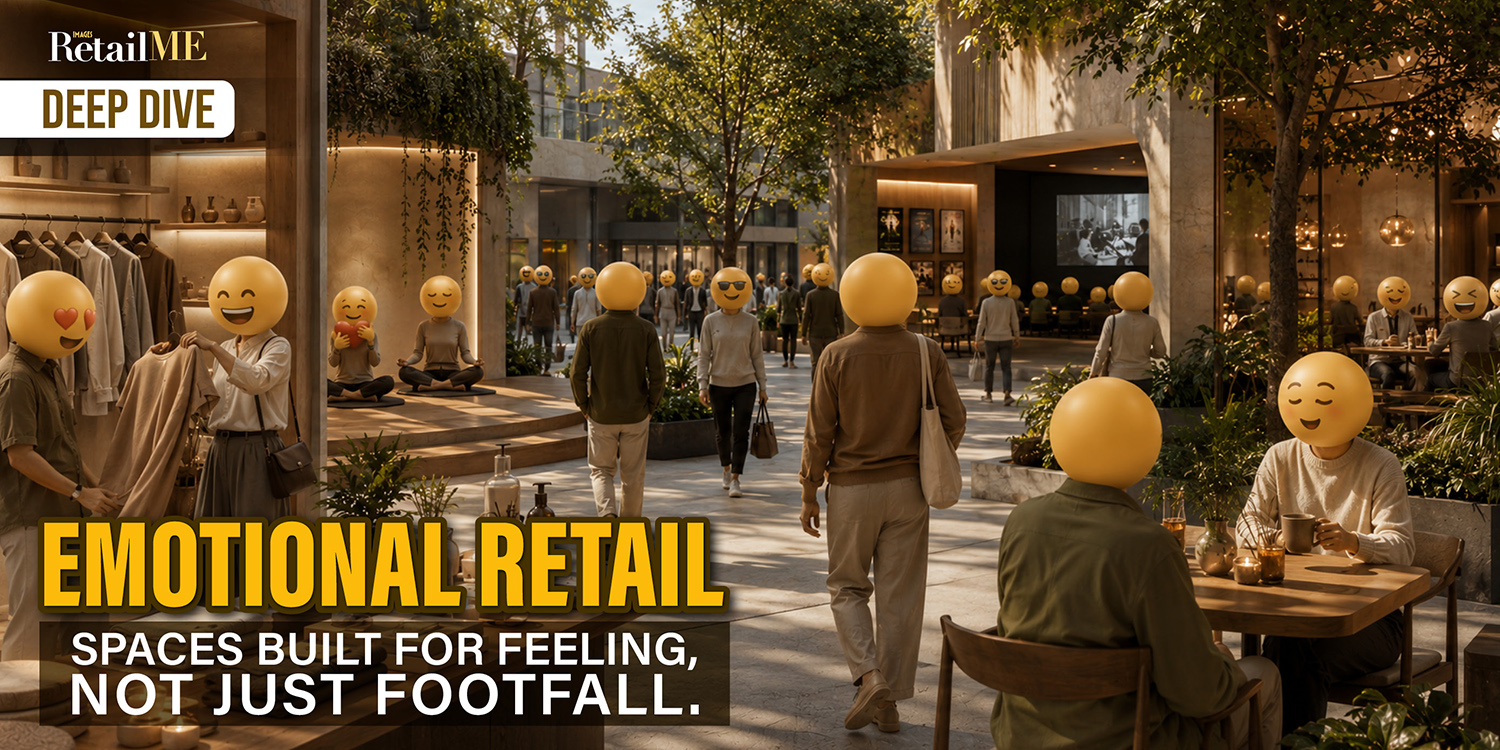
Why cinemas, wellness sanctuaries and cultural districts are becoming emotional infrastructure for urban consumers.
For years, urban retail was designed around stimulation. Bigger experiences. Faster transactions. Louder environments. Cities like Dubai became symbols of movement and momentum, where consumption often mirrored the speed of the city itself.
But increasingly, consumers are seeking the opposite.
Across wellness spaces, independent cinemas, nostalgic retail concepts and cultural districts, a quieter behavioural shift is unfolding. Consumers are gravitating toward places that allow them to pause, slow down emotionally and reconnect with experiences that feel more human.
The shift is subtle, but commercially powerful. Because today, people are no longer only paying for products or services. They are paying for how spaces make them feel.
The Need to Feel Something Again
Modern consumers are overstimulated. Digital platforms offer endless access, endless scrolling and endless visibility. Yet despite having more convenience than ever before, people are increasingly seeking experiences that feel emotionally tangible.
“People today are constantly hungry for new experiences. They are no longer just buying products, they want to understand the story behind brands, engage with trends, and feel part of the excitement around them,” says Hassan Tamimi, CEO of The Little Things.
That desire for participation is changing how physical spaces are being designed. Retail environments are becoming more immersive, sensory and emotionally layered. At The Little Things, nostalgia, storytelling and pop culture are intentionally woven into the customer journey to create discovery rather than urgency.
Similarly, in wellness, consumers are no longer approaching leisure as an occasional indulgence. According to Christian Kiefer, CEO and Founder of Spa Wellness Project Management, the emotional pressures of modern urban life are pushing people toward spaces that feel restorative and grounding.
“Guests are actively seeking experiences that allow them to disconnect, reset and feel a sense of emotional and physical restoration,” he says. Whether through wellness rituals, immersive retail or cultural experiences, the underlying consumer need is increasingly similar: people want environments that emotionally hold them for a while.
The Rise of Intentional Spaces
In a city built on pace and ambition, slower spaces are beginning to stand out precisely because they feel different from everything surrounding them. Tamimi believes this is why more intentional environments are resonating deeply with consumers in Dubai today.
“Consumers are looking for moments where they can pause, explore and genuinely connect with a brand,” he explains.
That same behavioural shift is becoming increasingly visible within entertainment and cultural spaces too. According to Rawan Haider, General Manager of Cinema Akil, audiences today are becoming more selective about what deserves their time and physical presence.
“With entertainment now available at home, people want experiences that genuinely feel worth going out for,” she says. That expectation goes far beyond content itself. Consumers are increasingly evaluating the emotional atmosphere around an experience, whether through pacing, intimacy, conversation, or community.
“People are gravitating towards experiences that feel thoughtful, community-driven and less commercial,” Haider adds.
The common thread across categories is intentionality. Spaces no longer need to overwhelm consumers to keep them engaged. Increasingly, they need to make them feel emotionally comfortable enough to stay longer.
Community is Becoming the Product
One of the strongest shifts across retail, wellness and entertainment is that community itself is becoming part of the value proposition. At Cinema Akil, Haider notes that audiences are not simply arriving for films anymore. They are coming for the collective emotional experience around them.
“Streaming gives people access. Cinema gives people an experience,” she says. “There’s something very different about sitting in a room with strangers and collectively reacting to a story in real time.”
The conversations after screenings, the shared discoveries and the feeling of participating in something together are becoming central to the experience itself.
Similarly, Tamimi sees community playing an increasingly important role within retail environments. “What truly stands out is the combination of meaningful engagement and discovery, where people feel seen, engaged and part of a community,” he says.
That emotional familiarity is becoming more valuable than aspiration alone. Consumers still appreciate exclusivity and rarity, but increasingly, they are seeking spaces that feel emotionally relatable rather than intimidatingly aspirational.
In wellness too, Kiefer notes that people are increasingly prioritising spaces that feel authentic, personal and emotionally attentive rather than transactional.
“They are prioritizing quality over quantity, choosing spaces that offer a deeper sense of care, authenticity and personalization,” he says. Across categories, loyalty today is being built less through pure product and more through emotional resonance.
Atmosphere Has Become a Business Strategy
The physical environment itself is now playing a much larger commercial role than before.Lighting, sound, pacing, texture, sensory cues and spatial intimacy are all becoming tools for emotional retention.
“People remember how a space makes them feel as much as the products they discover,” says Tamimi. At The Little Things, storytelling, visuals, music and curated product journeys are intentionally designed to spark curiosity and exploration. Meanwhile, wellness spaces are leaning into low-stimulation environments that help consumers regulate stress and mental fatigue.
“There’s a growing demand for spaces that help people regulate stress and step away from constant stimulation,” says Kiefer. Cinema spaces too are benefiting from this return to atmosphere and collective emotion. According to Haider, independent cinemas are increasingly functioning like galleries or cafés within urban life, helping shape the cultural rhythm of cities.
“They act as gathering spaces that help shape the cultural identity and rhythm of a city,” she says.
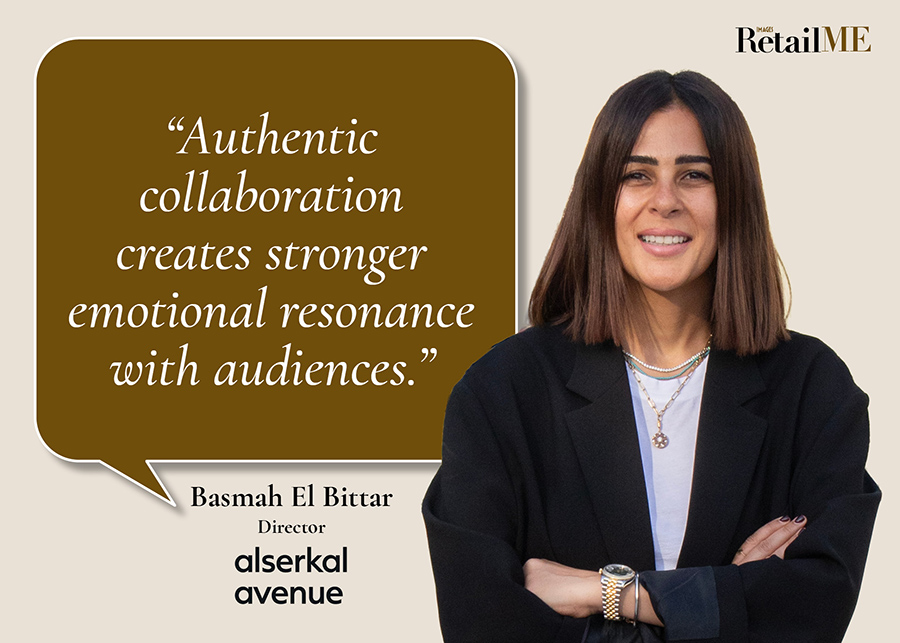
This emotional role of space is perhaps why cultural ecosystems like Alserkal Avenue continue resonating strongly with urban audiences. According to Basmah El Bittar, the Avenue’s philosophy has always centred around curiosity, dialogue and cultural exchange rather than transactional interaction alone.
“The exchange of ideas, meaningful dialogue and the sharing of creative energy is contingent upon having a community committed to curiosity and cultural exchange,” she explains.
That collaborative ecosystem creates authenticity, something consumers are increasingly sensitive to today.
The Future May Feel Softer
Across all these spaces, one idea repeatedly surfaces: consumers are searching for emotional relief from the intensity of modern life.
Not escapism necessarily, but restoration. What makes these spaces powerful is not simply what they sell, screen, or serve. It is the emotional state they create around the consumer.
“Today, people are ultimately paying for the feeling,” says Kiefer.
And perhaps that explains why some of the most culturally relevant spaces today are not the loudest ones, but the softest. The ones that allow people to slow down, feel connected, and momentarily breathe differently within the rhythm of the city.


Watsons to open 20 new stores in the GCC
In 2020, global health & beauty retailer AS Watson Group signed its
April 29, 2024 | By Rupkatha BBeyond the Bouquet: Why Trust Is Becoming the New Currency of Gifting
From a Single Coffee Machine to a Regional Coffee Empire: The Coffee Planet Story
/ 
For decades, Haldiram’s built deep recall across the UAE through its packaged

When House of Habanero opened its first physical location at Alserkal Avenue
Union Coop has completed a significant expansion of its Hatta Souq branch,

Saudi Arabia is set to welcome U.S. food exporters this week, as

Majid Al Futtaim has officially entered the discount retail segment with the
As convenience increasingly becomes currency in the region’s grocery landscape, Union Coop

As wellness becomes a lifestyle in the UAE, the grocery aisle is

Grandiose, one of the leading grocery retailers in the UAE with a

With shifting consumer behaviour, rising cost pressures, regulatory changes, and rapid digitization,

Union Coop’s blend of retail expansion, digital innovation, and community focus is

Abu Dhabi-based MAIR Group has marked a pivotal stage in its transformation

In a move that blurs the line between shopping and investing, Apparel
/ 
In a retail landscape dominated by shelves stacked with finished products, Oo

Asda, the UK’s third-largest grocery retailer, has strengthened its partnership with Deliverect
From bullion to boutiques, investment to immersion, Dubai Gold District marks a

Homegrown Ventures announced its investment in PawPots, an innovative provider of fresh,

Speed and accuracy have become non-negotiable in the current logistics landscape. In
Dubai, UAE – 19 May 2025 – FancyTech A&M (Advertising & Marketing) Awards, is
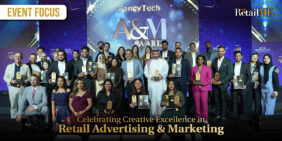
The Retail Reboot Summit 2025 culminated spectacularly with the inaugural FancyTech A&M

NRF Vice President of Education Strategy Susan Reda forecasts 2025’s retail trends

Pet ownership in the UAE has transformed dramatically over the past two

The Dubai Duty Free (DDF) has recorded sales of $1.94 billion up





 Previous Article