
Seventy-five years is not just a milestone. It is a mirror. For Ajmal, a house built on heritage, craft, and cultural memory, this anniversary is less about looking back and more about deciding what must change to stay relevant. Few legacy brands reach this moment with the courage to question their own familiarity. Fewer still choose disruption over comfort.
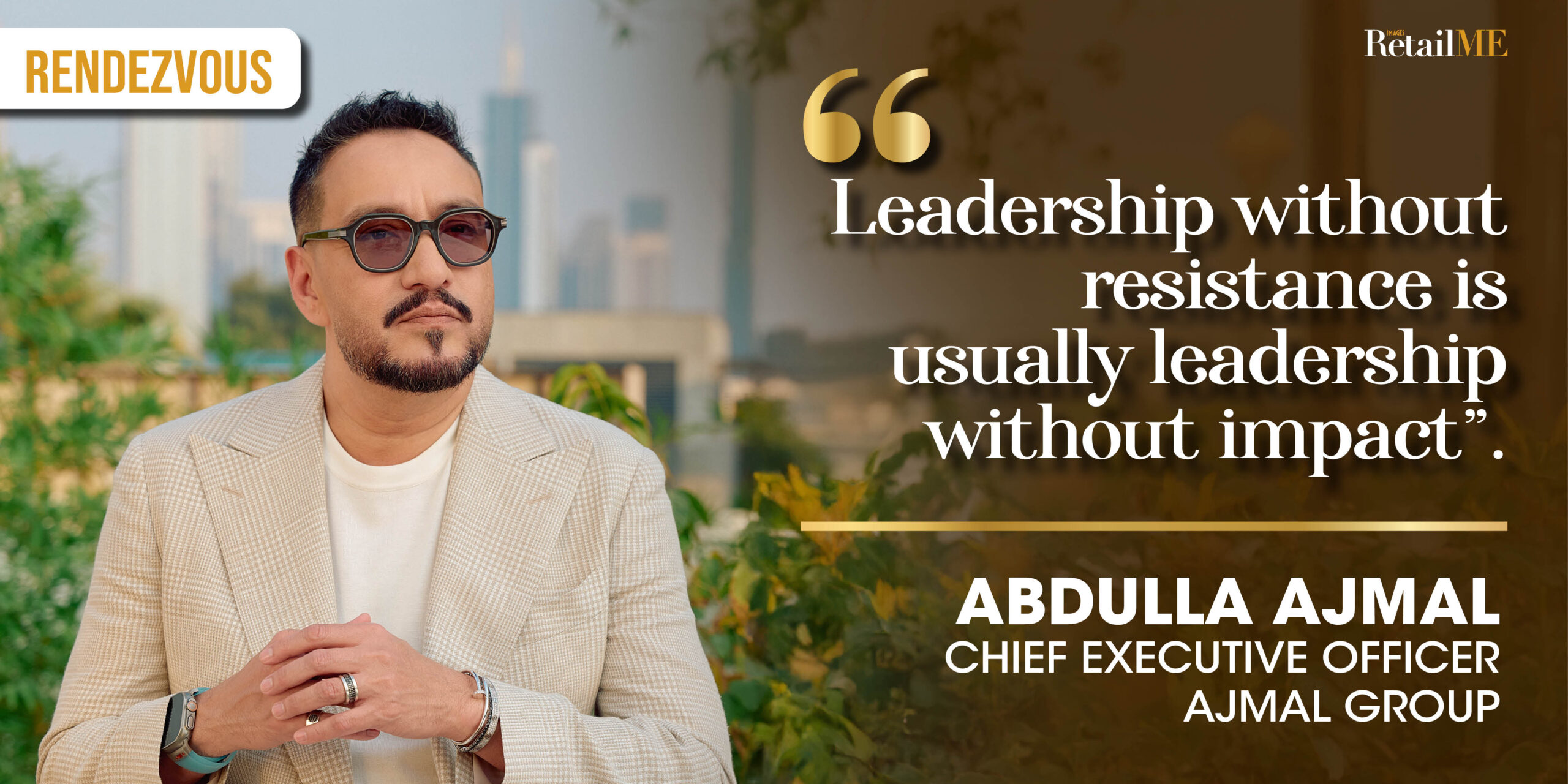
Under the leadership of Abdulla Ajmal, the CEO at Helm, this 75th year is being marked not by cosmetic updates or commemorative nostalgia, but by a fundamental rethinking of how a heritage brand speaks, behaves, and leads in a world that no longer rewards legacy alone.
What emerges is not a rebrand for celebration, but a repositioning for global recognition. In conversation with the leader who believes in action more than words.
A City as a Statement
The idea of rebranding did not begin in a boardroom or a branding workshop. It began with a simple, unsettling question. Why should someone in London care about Ajmal, Abdulla asks.
In markets where Ajmal’s name carries generational familiarity, the brand is instinctively understood. But outside those emotional geographies, recognition is not inherited. It must be earned. This realisation led to a bold decision. Not to erase Ajmal’s identity, but to anchor it to something universally understood. A city that represents ambition, scale, and modernity. A city whose name carries immediate weight.
Dubai.
The shift to “Ajmal Dubai” was not about geography. It was about relevance. It was about intrigue. About turning a legacy name into a global conversation starter. Where “Ajmal” might be familiar, “Ajmal Dubai” demands attention. It was also a leadership moment. One that required the confidence to touch something deeply personal. Ajmal is not just a brand name. It is a family name. A lineage. A responsibility.
The board’s unanimous approval was not just an endorsement. It was trust.
Change Begins Inside
For leadership, the true test of transformation is never external reaction. It is an internal belief. Ajmal’s decision to announce its shift internally, before partners, customers, or the market, was deliberate. Change, Abdulla Ajmal believes, must be lived before it is spoken.
“I wanted our people to be the first to feel the shift. Before we talk to the outside world, the inside has to believe in it,” he says. At 75, Ajmal is not chasing overnight reinvention. There is no illusion of a one-night reset or instant transformation. This is not an FMCG brand with unlimited budgets and global switchovers at the flick of a switch. What is unfolding instead is a measured, phased evolution, designed to be absorbed, understood, and sustained.
He adds, “Seventy-five years is not a logo change. It’s a dialogue we will keep having all year.”
The anniversary, in Ajmal’s view, is not a campaign. It is a year-long conversation.
Leadership Without Comfort
Taking over as CEO in a family business is never ceremonial. It is emotional. Cultural. Political. After nearly three decades within the organisation, leadership did not arrive as disruption for disruption’s sake. It arrived as a responsibility. A responsibility to question habits that had grown too comfortable, and to inject urgency into a system that had slowed under the weight of familiarity.
“If I don’t face resistance, then something is wrong. It means I’m not really changing anything. The approach is not aggressive for effect, but intentional. Young leaders have been brought into senior roles. Specialists, not generalists, are being trusted to reshape culture, brand, and people practices. Resistance is not feared. It is expected. I want people who are better than me in their domains. That’s the only way culture actually changes,” he explained.
In fact, resistance is welcomed.
Because leadership without resistance is usually leadership without impact.
Calculated Risk, Not Reckless Change
There is no romanticism about transformation here. This is not a story of fearless leaps. It is a story of calculated risk. Every decision carries financial weight, emotional cost, and reputational exposure. And yes, sleepless nights.
“I’ve never taken risks of this scale before. There are nights I don’t sleep because there is a lot at stake, including our heritage. But the philosophy is clear. Comfort is more dangerous than risk. In today’s environment, standing still is the fastest route to decline. Being comfortable is the biggest danger. If we slow down, we disappear.” The mandate, he says, is simple. Be cautious, but never complacent. Be respectful of legacy, but never imprisoned by it.
“I want us to be careful, but not comfortable. Comfort kills ambition.”
The Culture Question
At the heart of Ajmal’s next chapter lies culture.
Not posters. Not slogans. But accountability.
The shift underway challenges long-standing norms of hierarchy and decision-making. Leaders are expected to answer questions, not simply give orders. Teams are encouraged to bring problems with solutions, not excuses. Mistakes are tolerated when they come from intent and intelligence, never from negligence.
“Don’t come to me with a problem unless you’ve thought of at least two solutions. That’s how leaders are built. Leadership here is consultative, but decisive. Open, yet firm. Human, but disciplined. I will always listen. But once a decision is made, we move,” he firmly explains.
Legacy Is Not the Past
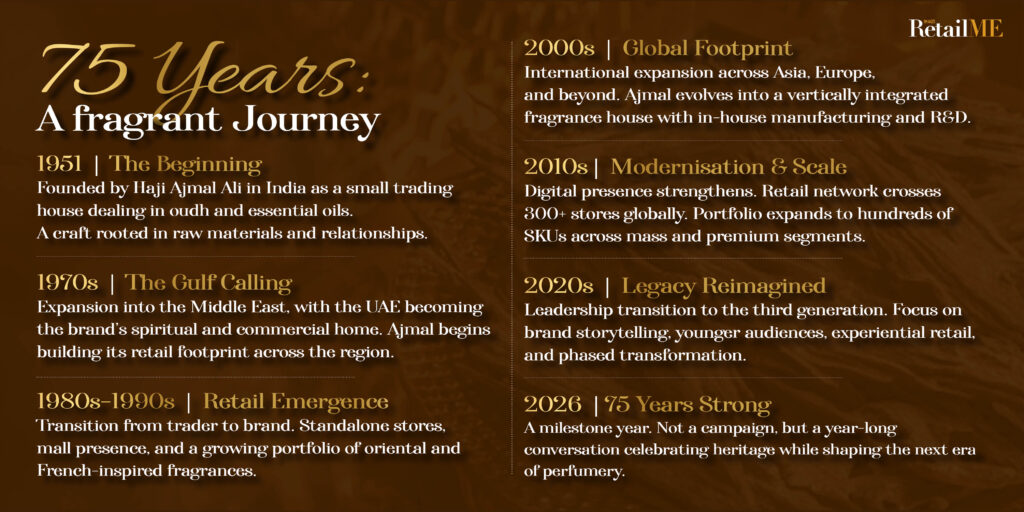
Perhaps the most telling insight from this 75-year reflection is this. Legacy, at Ajmal, is not about preservation. It is about momentum.
The brand’s signature. It’s unmistakable “Ajmalness”. The sensory identity that loyal customers recognise instinctively. These remain non-negotiable.
“There is an Ajmalness you can’t explain, but you can feel it. That will never change,” he muses.
But everything around them must evolve.
Markets will change. Customers will mature. Competition will multiply. The only constant Ajmal believes in is relevance.
“If we stop evolving, loyalty will not save us,” according to Ajmal.
At 75, Ajmal is not celebrating survival.
It is signalling intent.
To move faster.
To think younger.
To lead bolder.
“Legacy is not something you inherit. It’s something you have to earn again, every single day,” he sums up.
Because legacy, when led well, is not the past.
It is a responsibility to the future.



Watsons to open 20 new stores in the GCC
In 2020, global health & beauty retailer AS Watson Group signed its
April 29, 2024 | By Rupkatha BBeyond the Bouquet: Why Trust Is Becoming the New Currency of Gifting
From a Single Coffee Machine to a Regional Coffee Empire: The Coffee Planet Story
/ 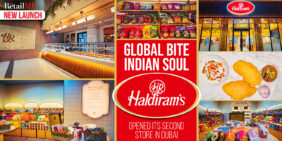
For decades, Haldiram’s built deep recall across the UAE through its packaged

When House of Habanero opened its first physical location at Alserkal Avenue

Union Coop has completed a significant expansion of its Hatta Souq branch,

Saudi Arabia is set to welcome U.S. food exporters this week, as

Majid Al Futtaim has officially entered the discount retail segment with the

As convenience increasingly becomes currency in the region’s grocery landscape, Union Coop

As wellness becomes a lifestyle in the UAE, the grocery aisle is

Grandiose, one of the leading grocery retailers in the UAE with a

With shifting consumer behaviour, rising cost pressures, regulatory changes, and rapid digitization,

Union Coop’s blend of retail expansion, digital innovation, and community focus is

Abu Dhabi-based MAIR Group has marked a pivotal stage in its transformation

In a move that blurs the line between shopping and investing, Apparel
/ 
Zuvees believes the future of gifting won’t be won through bigger catalogues

In a retail landscape dominated by shelves stacked with finished products, Oo
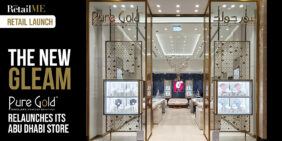
Pure Gold Jewellers, one of the region’s leading jewellery retail brands, today

Ulta Beauty’s arrival in the Middle East is not simply another international

European denim powerhouse JACK & JONES is making a decisive return to

From bullion to boutiques, investment to immersion, Dubai Gold District marks a

The opening of New Balance’s first-ever Grey store in the Middle East

LOJEL, the global brand celebrated for its design-forward luggage and everyday carry
As youth culture reshapes the global retail playbook, Majid Al Futtaim is





 Previous Article