


Experiential dining has transformed the restaurant industry inculcating multi-sensory gastronomy to Instagram-worthy presentations. But as costs rise and consumer expectations evolve, the challenges and opportunities are constantly subject to change.
In an attempt to lay the ground for an insight packed conversation around the nuances of experiential dining, moderator Ketaki Shah, Head of Marketing at Foodmark & Citymax Hotels (Landmark Hospitality) led with a fundamental question, “how do you define experiential dining what is your take on at what does it mean to you? Is it storytelling? Is it a service?”
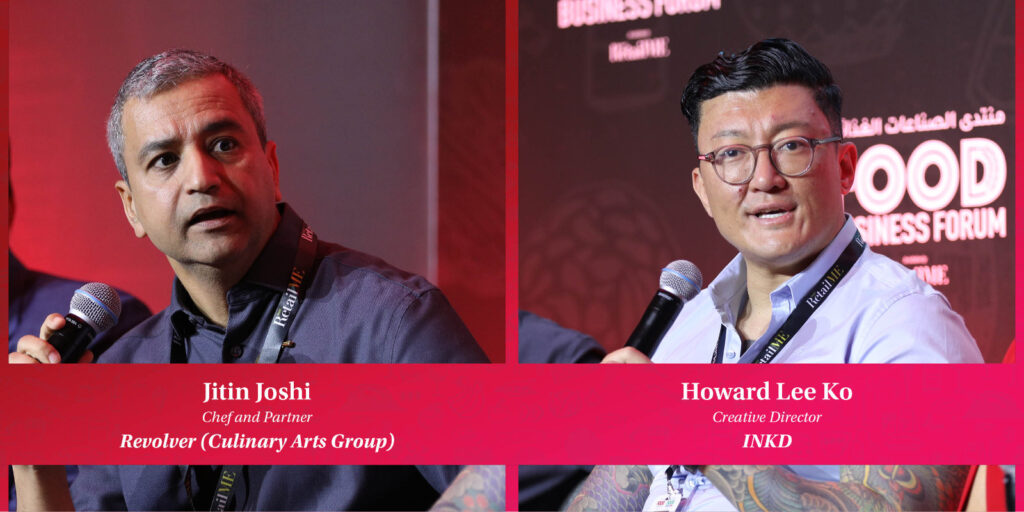
On the panel of of experts for this power dialogue were:
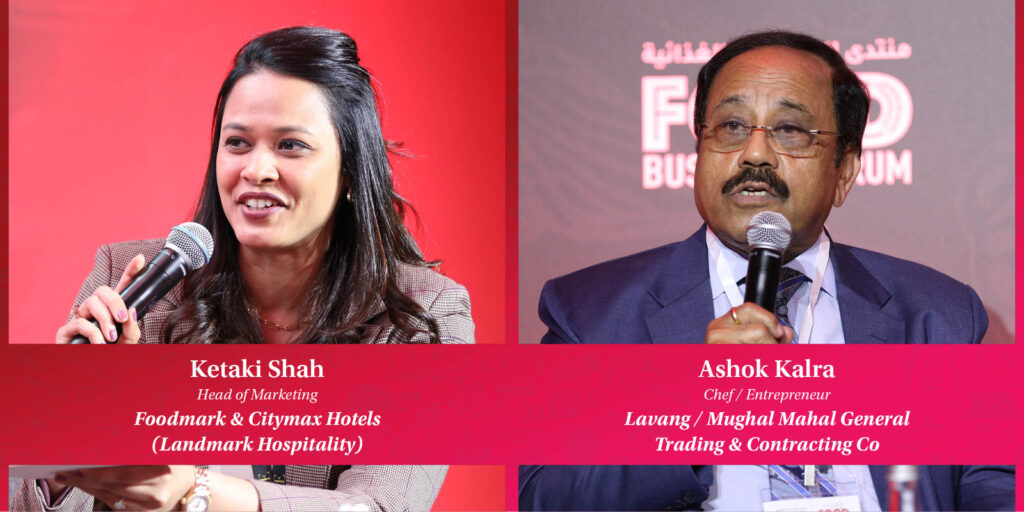
“Experiential dining can be defined as a multi-sensory experience which involves interactive, immersive and entertaining elements,” explained Ashok, a seasoned restaurateur with 40 years of experience operating restaurants in Kuwait and recently launching Lavang in Dubai. “The difference now is that we have added intrinsic—essential or non-essential—factors to make the dining experience more engaging and personalized.”
Chef Jatin, who recently opened Revolver in Dubai, offered a more pragmatic perspective: “When you dine out to satisfy your hunger, that’s one part of it. Anything beyond that is experiential dining. Having street snacks in Mumbai, having your chats, or having a panini on a cold winter day that evokes a memory—that’s experiential dining.”
Howard noted that technology has accelerated this transformation: “In 2003, when I was working in a Michelin star restaurant, the world was still so big. Now with social media and information accessibility, things have excelled and moved aggressively forward.”
The Emotional Architecture of Modern Dining
What drives consumers to seek experiences beyond sustenance? The answer lies in the complex interplay of emotion, memory, and social validation that modern diners crave.
Fay, bringing a business perspective to the discussion, emphasized the emotional component: “Experiential dining is basically connecting with something that you’re looking for. It has to do with emotion. Sometimes it’s nostalgia, sometimes it’s an appetite for adventure or exploration, but it’s very emotional. I tie the experience to the emotion.”
Alex, representing the theatrical approach to dining with his “gastro theaters” concept, reinforced this sentiment: “Great food is not enough today. Guests want to get emotions, storytelling, and performance inside the restaurant. Our mission is to create gastro theaters around the world because food is food, you can taste food everywhere.”

The generational divide in dining motivations revealed fascinating insights. Chef Jatin observed: “Different generations come and dine out for different reasons. The high-end experiential dining restaurants are expensive and often once-in-a-lifetime experiences. For the younger generation, it’s about trends and it’s about social validation, being seen, and sharing experiences.”
This social media-driven behaviour brings out the performative aspect of dining. As Ashok noted from his daughter’s influence on their restaurant concept, “The younger generation wants to experience things besides fine dining. They want to be seen, every dish they want to click so they can tell their friends they are in that place.”
The Balancing Beam of Profitability & Pricing
The financial implications of experiential dining present a complex puzzle for restaurateurs.
Highlighting this nuance was Ketaki’s next question to the panel, “How do you price an experience, and more importantly, how do you ensure profitability while delivering value?”
Howard addresses the post-pandemic reality, “After COVID, with volatility in the world, people don’t want to spend 900 or 1000 dirhams per person for a meal. With inflation, I used to go out with two people for 1,500 dirhams and have a great meal with wine. Now that runs me 2,500 dirhams. We have to adapt to what the consumer wants, something more attainable.”
Chef Jatin’s approach to pricing at Revolver demonstrated the agility required in today’s market: “We’ve changed our pricing strategy several times over three months. If it doesn’t work at 100 dirhams, I’ll put it at 95 dirhams, but I’ll ensure it works within my margins and the value proposition given to the diner.”
Ashok emphasized the importance of market research and strategic positioning, “When you start with a new project, you must do proper market research. It depends on what you’re going to provide for experiential dining. Are you linking dining with entertainment, or is it only dining? If you emphasize entertainment more, the pricing structure will be different than if you stress dining with entertainment as a supplement.”
The generational spending patterns revealed intriguing contradictions. Fay’s 16-year-old son dismissed experiential dining as “shoo food, little morsel on dry ice” and overpaying for it, yet the same generation seeks experiences at venues like Topgolf. This suggests that the value perception of experiential dining varies significantly across different contexts and presentations.
Operational Alchemy: The Challenges Behind the Magic
Running an experiential dining establishment requires balancing creativity with operational efficiency, a challenge that tests even seasoned restaurateurs.
Ashok, drawing from four decades of experience, emphasized foundational principles: “Whatever you may do, be it artificial intelligence or augmented reality, the quality of food definitely plays a vital role. The hiring has to be really good. Your chefs have to be selected very discretely, and you have to ensure they maintain quality throughout.”
The operational complexity increases when restaurants attempt to scale experiential elements. Howard shares his vision for INKD, a 20-seater concept: “It’s something I’ve always wanted to do. There’s a gap in the market here for bistronomy, a five-course meal for a reasonable price in a 20-seater that looks like a Brooklyn tattoo loft but delivers full fine dining when you sit at the bar.”
Chef Jatin’s approach focused on creating intimate experiences within existing frameworks, “In my restaurant, I have eight chairs on the counter, developing a chef’s counter experience where you’re within the same restaurant but creating an immersive experience within an experience. I don’t need robots or AI, all I have to do is be myself exclusively for those eight people.”
The Technology Tango: Innovation vs. Authenticity
The role of technology in experiential dining sparks debate about enhancement versus gimmickry. While some embrace AR, projection mapping, and AI integration, others question whether technology truly adds value or merely creates expensive distractions.
Alex advocated for technological integration, “We’re trying to combine digital art and immersive storytelling with cuisine and service. Our mission is to create gastro theaters around the world. This idea is very modern and will help our business not be boring.”
However, the panel revealed skepticism about technology’s cost-benefit ratio suggesting that technology’s value depends heavily on context and execution.
The consensus appeared to favor technology as a tool rather than a crutch. Chef Jatin’s philosophy of personalisation over high-tech solutions resonates with this approach: “It’s about creating a memory. You can get a Hermès bag for X amount, but you can go to India and get a handcrafted, hand-stitched bag with your name on it. That creates value and not just the money paid, but the thought behind printing your name on chopsticks.”
Global Inspirations: Learning from Success Stories
The panel’s discussion of successful experiential dining models worldwide reveals common threads that transcend cultural boundaries.
Howard cited Zen in Singapore as a transformative experience, “One of the best meals of my life. $2,000 per person, but I’ll spend it again in a heartbeat. They bring you into three different rooms during your meal. Those are the types of experiences that make you never forget that restaurant.”
Chef Jatin recalled his benchmark experience at French Laundry, “I remember a meal in 2006, the oyster and pearl opening gambit. Those moments create memories not just because of the brand, but because of something unexpected when you’re going with an open canvas.”
These examples highlight that successful experiential dining creates lasting memories through thoughtful progression, surprise elements, and emotional resonance rather than mere spectacle.
Alex’s approach with White Rabbit in Moscow demonstrated the power of emotional connection, “I met someone from the Russian tourism government who said White Rabbit was his best experience. He wanted to repeat that emotion in our Dubai restaurant. When I speak with guests about their emotions, they say money isn’t important, emotions are important.”
Collaboration Over Competition
The complexity of experiential dining often requires strategic partnerships that go beyond traditional supplier relationships.
Alex emphasized authenticity in partnerships: “Today, it’s not about fancy categories or big names. What matters most is having shared values and a common story. The best partnerships are when brands create something real, not just show off. We always ask: do you believe in the same things?”
This philosophy extends to how restaurants approach trend adoption and menu evolution. Rather than chasing every trend, successful operators focus on authentic integration that aligns with their brand values and customer expectations. The panel too suggested that partnerships should enhance rather than overshadow the core dining experience, supporting the narrative rather than competing with it for attention.
Future Trajectories: Evolution, Not Revolution
Looking ahead, the panelists expressed cautious optimism about experiential dining’s future, emphasising evolution over revolution.
Fay predicted continued innovation, particularly in Dubai’s unique market: “Dubai is a unique city because of diversity and the amount of visitors. The dynamics allow for innovation, experiments, and pushing boundaries. We’ll be seeing things we can’t even imagine right now.”
However, the consensus suggests that sustainability and accessibility will become increasingly important factors. Howard’s emphasis on “attainable” experiences and Chef Jatin’s focus on value propositions indicate a maturing market that must balance spectacle with substance.
The panel revealed that independent operators can successfully adopt experiential elements without massive investments, suggesting democratisation of the concept. This could lead to a broader spectrum of experiential dining options, from intimate chef’s counter experiences to large-scale gastro theaters.
The Verdict: Investment or Indulgence?
The panel’s rapid-fire conclusion session revealed telling insights about industry sentiment toward experiential dining:
Is experiential dining a trend? The responses split between “trend” and “here to stay,” with most panelists viewing it as an evolving permanent fixture rather than a passing fad.
Are diners hungry for elevated experiences worth the splurge? Agreement was mixed, reflecting the market’s price sensitivity and the need for clear value propositions.
Are operational costs justifiable long-term? Cautious agreement prevailed, with emphasis on market conditions and execution quality.
Is technology worth the hype and cost? Responses varied significantly, suggesting that technology’s value depends on context and integration quality.
Can independent operators adopt experiential elements without massive investments? Unanimous agreement suggests that experiential dining is accessible to operators of all sizes with creative approaches.
Towards A New Hospitality Paradigm
The discussion revealed that experiential dining represents more than a trend nudging towards a fundamental shift in how the hospitality industry approaches customer engagement. Success requires balancing multiple elements: emotional connection, operational excellence, financial viability, and authentic innovation.
As Chef Jatin aptly summarised: “It’s about creating a memory. Whether it’s the personalisation, the unexpected moment, or the emotional connection—that’s what makes dining experiential.”
The industry’s challenge lies not in determining whether experiential dining is worth the investment, but in understanding how to execute it authentically, sustainably, and profitably. Those who master this balance will likely define the future of hospitality, creating experiences that transcend mere meals to become lasting memories.



Watsons to open 20 new stores in the GCC
In 2020, global health & beauty retailer AS Watson Group signed its
April 29, 2024 | By Rupkatha BAsda and Deliverect Deepen Partnership to Power Rapid Delivery Across Asda Express
SQUATWOLF’s Kuwait Flagship Store Anchors Its Regional Growth Ambitions
/ 
For decades, Haldiram’s built deep recall across the UAE through its packaged

When House of Habanero opened its first physical location at Alserkal Avenue

Union Coop has completed a significant expansion of its Hatta Souq branch,

Saudi Arabia is set to welcome U.S. food exporters this week, as

Majid Al Futtaim has officially entered the discount retail segment with the

As convenience increasingly becomes currency in the region’s grocery landscape, Union Coop

As wellness becomes a lifestyle in the UAE, the grocery aisle is

Grandiose, one of the leading grocery retailers in the UAE with a

With shifting consumer behaviour, rising cost pressures, regulatory changes, and rapid digitization,

Union Coop’s blend of retail expansion, digital innovation, and community focus is

Abu Dhabi-based MAIR Group has marked a pivotal stage in its transformation

In a move that blurs the line between shopping and investing, Apparel
/ 
Tableside theatre, burrata cracked over butter chicken, a Laal Maas Cigar —
For decades, Haldiram’s built deep recall across the UAE through its packaged

In hospitality, brands are often discussed as concepts. But the strongest ones
At Souk Madinat Jumeirah, with the Burj Al Arab rising quietly in

Keto Kartel has entered the UAE’s premium wellness food space at a

With at least seven stores now operating across the country—mainly in Dubai,

The UAE Restaurant Group (UAERG), the official representative body of the country’s
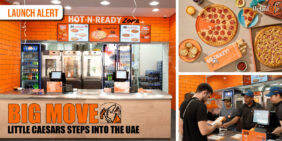
As one of the world’s largest pizza chains, Little Caesars is making

From predictive inventory to robot deliveries, technology is reshaping the hospitality industry

The food service industry in the Middle East is being ushered into





 Previous Article