

In today’s retail landscape, the convergence of vision and execution assures continued success. Moderated by Daniel Jose, Innovation and Training / Marketing Manager at The Little Things (TLT), the Retail Operations roundtable brought together decision-makers across marketing, store operations, customer experience, and technology to decode what it truly means to run a connected business.
As a beginning note, Daniel stressed that staying relevant in a fast evolving landscape accompanies the need to unlearn traditional practices to stay competitive in diverse geographies.
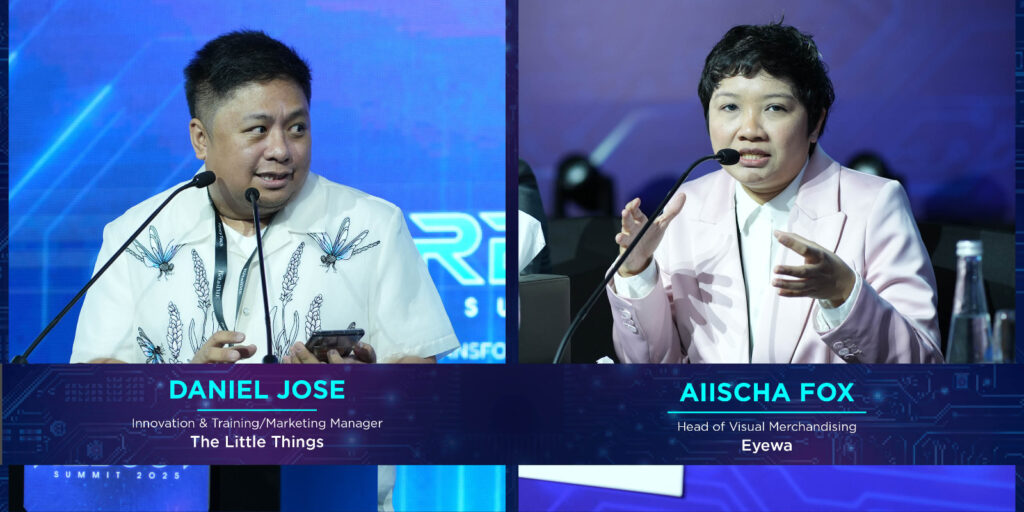
Aiischa Fox, Head of Visual Merchandising, Eyewa, shared, “Coming from Singapore, where the retail market is already quite dynamic, moving to the UAE isn’t about unlearning, it’s about learning what works in this market. We focus on adapting to local consumer needs. If something doesn’t make sense here, that’s what we need to unlearn.”
Aditya Singh, Head of Planning & Merchandising, Splash Fashions (Landmark Group), emphasised technology’s transformative impact, “I’ve been in the market for about five years now. With the advent of technology, there’s a lot we’ve had to unlearn. For instance, in fashion retail most shoppers want something new, they don’t want to repeat outfits every season.”
He stressed that hitherto, fashion worked on data analytics—what sold the previous year would be repeated this year. But now, with ML and especially AI, brands can blend fashion forecasts with demand. “What’s on the runway today can hit stores in 30 days, at a fraction of luxury prices. We cannot keep churning past seasons data and buying the same thing. Things change fast and we’re learning as we learn to change.”
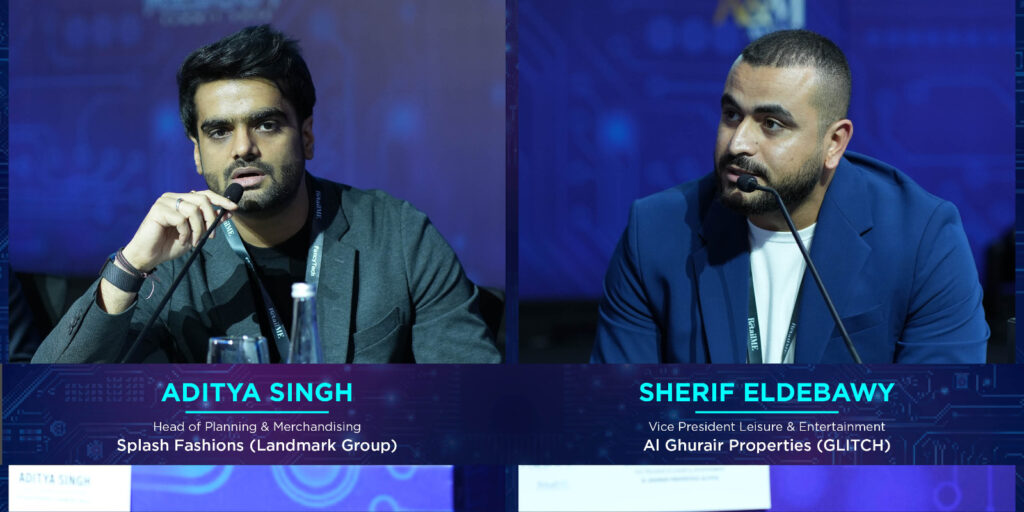
Sherif Medhat Eldebawy, Vice President, Leisure & Entertainment, Al Ghurair Properties (GLITCH), added an entertainment perspective, “We all need to adapt to new technology. From a mall perspective, UAE is a region of thriving mall culture. Consequently, the majority of the malls have realised that entertainment must be an anchor because so many experiences now are going digital. However, when it comes to entertainment, there are so many aspects you cannot replicate online yet.”
Daniel then zeroed in on CRM’s evolution from a promo engine to a dynamic tool for real-time personalisation and rethinking loyalty in a tech-led world.
Rachna Gopalan, CRM Specialist, Lals Group, responded, “CRM and loyalty are evolving faster than we can keep up. If someone opens the app, abandons a cart, or passes by a store, I can instantly nudge them back in. In an omnichannel setup, that moment-based connection is crucial.”
She added, “With the development of predictive analytics, CRM tools now tell me if a customer is likely to churn or miss their 90-day shopping cycle. If someone buys product A, I can prompt them with product B. Personalisation is the buzzword, and we’re working to get as precise as possible. Loyalty is now an ecosystem.”
Additionally, Rachna emphasised that with AI-driven cohorts, segments are not built manually. Instead, the tool does it, leading to automated outreach, bringing customers back more effectively than ever.
Daniel added that digital marketing has become a crucial point of departure, crossing the bridge between campaigns and experience orchestration.
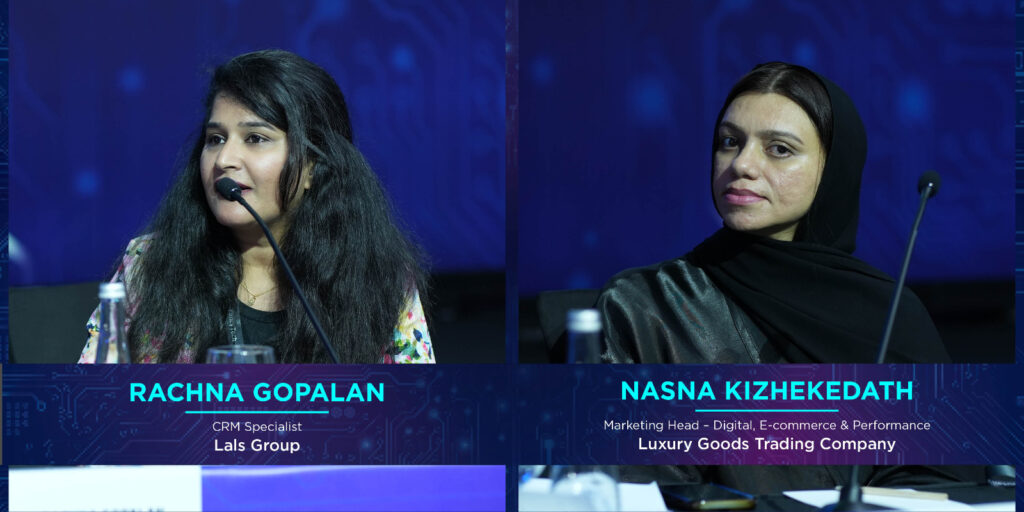
Nasna Kizhekedath, Marketing Head – Digital, E-commerce & Performance at Luxury Goods Trading Company, explained, “We’re realigning digital efforts across Baby Jewels, Baby Fati, Empathy, and Eternal. Our goal is to build a seamless, high-touch journey from discovery to purchase and beyond.”
She detailed market-specific strategies, “With Baby Jewels (UAE and KSA), the focus is on personalisation and storytelling, bringing the emotion of gifting to newborns alive through online experiences and curated in-store consultations. For Empathy and Eternal, the priority is digital sophistication and trust by leveraging CRM tools, virtual try-ons, and online-offline integration.”
“KSA is a legacy market for us with an established family name for over 50 years, so we focus on frictionless, premium experiences,” Nasna added. “In the UAE, the audience is more diverse and digitally fluent, so pricing, loyalty, and cultural nuance play a bigger role.”
Speaking about how technology enables to scale both online and offline. Mahmoud Elfeky, Vice President Retail – Middle East, Lenskart.com, highlighted, “Offline, innovations like AI-driven heat mapping, smart inventory management, and data analytics help brands make informed decisions, from store location strategy to layout optimisation and understanding in-store behaviour. Online, tools like AI-powered personalisation, virtual try-ons, and smart recommendation engines are creating experiences that mirror physical retail.”
For Mahmoud, aligning both worlds through data-driven insights is essential in fueling agility and sustainable growth.
To add to this, Aiischa shared, “Traditionally, as a visual merchandiser, I would spend an entire day in the store observing how customers walk around and interact with the fixtures and products. Additionally, we analyse sales-driven data, compare demographic as well as category wise insights.”
AI adds a deeper layer of analysis, tracking metrics such as customer dwelling time and providing data that explains why sales improved, helping organisations replicate success. “However, in visual merchandising, every store is unique, so one size doesn’t fit all.”
And Aditya emphasised AI’s practical applications, “While AI is often still a buzzword in retail, its practical applications are beginning to shift old paradigms. AI is helping teams look forward, not backward, offering predictive insights into emerging styles, supply chain disruptions, and store-level demand.”
“We’ve moved from forecasting for Saudi to forecasting for a specific Riyadh mall,” he said. With 60,000 SKUs across 200 stores, that granularity is critical. “AI tools now also flag upstream disruptions, from raw material shortages to global freight delays, helping brands prepare before the impact hits. While the current prediction accuracy for trends is about 50%, he sees this improving sharply in the near future.”
He flagged age demographics as a bigger disruptor than culture.
“Loyalty is fleeting, especially among younger shoppers who compare prices in-store on their phones. Predicting demand when churn is at 50–60% is an entirely different game.”
At the same time, Sherif explored rethinking engagement strategies, “The right kind of physical engagement can still pull kids in. The goal is not to compete with technology, but to blend it with movement and social interaction. At GLITCH, we’ve introduced a hybrid model, tech-enabled yet physically immersive. Take laser tag, for instance. It’s technology-driven, but it also gets kids moving, interacting, and having fun together.”
“Birthday parties, active zones, rope courses, they bring kids together in ways screens can’t. When done right, these experiences anchor footfall for malls and keep families coming back.”
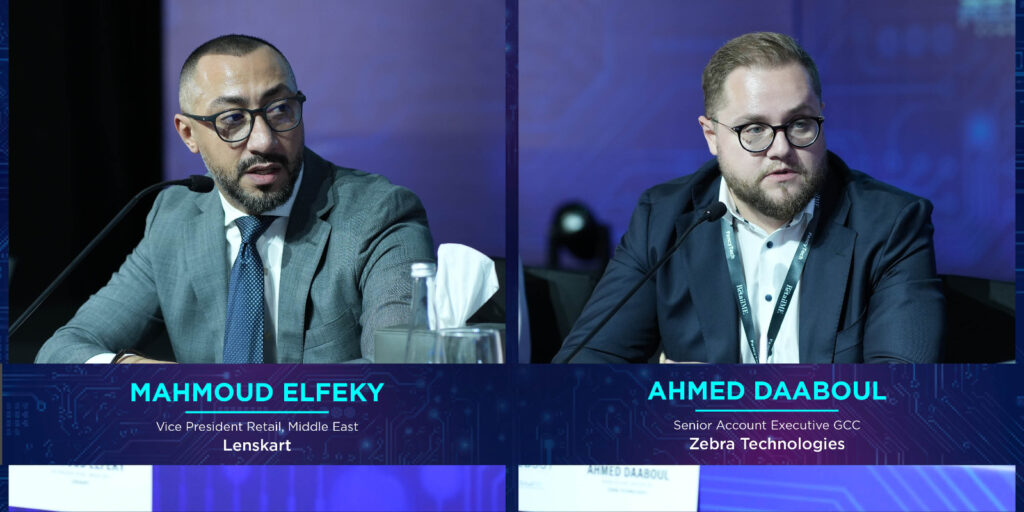
Ahmed El Banna, Territory Manager at Zebra Technologies, explained their framework: “At Zebra, we follow a simple yet powerful framework—sense, analyze, and act. It starts with sensing data at the source—be it the stockroom, sales floor, or warehouse—through our hardware. Then, AI-powered software transforms this raw data into actionable insights.”
He emphasised frontline focus where technology isn’t just for HQ dashboards. It’s about the frontline. “We work closely with store staff to understand what data they actually need to do their jobs better,” he said.
Using RFID as an example, he added, “If a customer walks into a Splash store looking for a specific dress in a certain size, RFID lets the associate immediately check availability, redirect to another store, or even place an order for home delivery.”
For him, “The biggest challenge isn’t the tech—it’s the approach. Many leaders have the vision, but fail to bring mid-management and frontline teams into the loop. Add to that a tendency to chase the cheapest option, and it’s no surprise implementation often falls short. As we say in German—those who buy too cheap, buy twice.”
Adita then shared Splash’s unified approach, “At its core, retail operations juggle four key elements: stock, store experience, customer, and staff. Technology now enables us to manage each of these with greater precision.”
He detailed technology’s impact across operations: RFID helps with availability and reducing shrinkage; data enables real-time customer personalization; AI optimizes staff scheduling; and real-time prompts improve visual merchandising effectiveness.
Nasna offered luxury retail’s nuanced view, “In luxury, not all technology is value-adding. It might sound innovative, but for us, the line is clear, if it enhances personalisation, speeds up service, and deepens the human touch, it’s enabling. If it adds layers of complexity without clarity, it’s just noise.”
“The best tech is often invisible to the customer but powerful behind the scenes. CRM tools help us deliver tailored experiences. Virtual try-ons offer convenience without compromising the brand’s premium feel.”
Rachna highlighted collaboration’s importance, “This takes me back to a previous role during Black Friday—retail’s most intense month. Each department had its own KPIs, and initially, we were all tracking well. But about ten days in, engagement plateaued, and individual efforts weren’t moving the needle.”
The breakthrough came when teams broke silos.
“Merchandising shared top categories, logistics flagged delivery constraints, customer service highlighted packaging issues, and I shared CRM insights. Once we aligned these insights, our ROI improved significantly. In today’s landscape, it’s not just about data—it’s about turning shared data into shared action.”
As the session concluded, panelists reflected on bridging the gap between big-picture vision and frontline execution. Mahmoud called for building operational agility culture, “We often focus so much on tech rollouts that we forget to bring the store team into the process.”
Aiischa added that tech integration should begin from the store design stage itself. Ahmed echoed thinking end-to-end, “What does the end customer actually want? That’s the only place a digital journey should begin.”
Aditya underscored the collaboration imperative, “Unless the person on the retail floor sees how a tool makes their life easier, adoption will always lag. Collaboration isn’t optional—it’s the difference between success and failure.”
“Omnichannel isn’t an upgrade. It’s a mindset shift. We’re not selling products—we’re curating branded, connected experiences at every touchpoint,” added Nasna.
Rachna rounded out with practical advice: keep upskilling, embrace cross-functional collaboration, and never stop listening.
And concluding the panel, Sherif aptly said, “A passionate team driven by a clear ‘why’ can move mountains.”



Watsons to open 20 new stores in the GCC
In 2020, global health & beauty retailer AS Watson Group signed its
April 29, 2024 | By Rupkatha BAsda and Deliverect Deepen Partnership to Power Rapid Delivery Across Asda Express
SQUATWOLF’s Kuwait Flagship Store Anchors Its Regional Growth Ambitions
/ 
For decades, Haldiram’s built deep recall across the UAE through its packaged

When House of Habanero opened its first physical location at Alserkal Avenue

Union Coop has completed a significant expansion of its Hatta Souq branch,

Saudi Arabia is set to welcome U.S. food exporters this week, as

Majid Al Futtaim has officially entered the discount retail segment with the

As convenience increasingly becomes currency in the region’s grocery landscape, Union Coop

As wellness becomes a lifestyle in the UAE, the grocery aisle is

Grandiose, one of the leading grocery retailers in the UAE with a

With shifting consumer behaviour, rising cost pressures, regulatory changes, and rapid digitization,

Union Coop’s blend of retail expansion, digital innovation, and community focus is

Abu Dhabi-based MAIR Group has marked a pivotal stage in its transformation

In a move that blurs the line between shopping and investing, Apparel
/ 
Asda, the UK’s third-largest grocery retailer, has strengthened its partnership with Deliverect

At the AI Roundtable, technology heads, marketers, and leaders explored how AI

As the world races towards automation, the Martech Summit brought the focus

From frictionless checkouts to AI-powered inventory, retail’s digital backbone took center stage

Pathfinder’s GenAI platform RetailGPT is built to bridge digital and physical retail.

In an exclusive interview with IMAGES RetailME, Driss Iziki, MEA Operations Director

By harnessing the power of artificial intelligence (AI), data and digital innovation,

In an era where digital transformation is pivotal, shopping malls are not

This panel discussion at MRF 2024 explored the balance between digital-first brands

At MRF 2024, Zebra Technologies showcased their AI-powered ‘store of the future’,

This session at MRF 2024 focused on the pivotal role of omnichannel





 Previous Article