

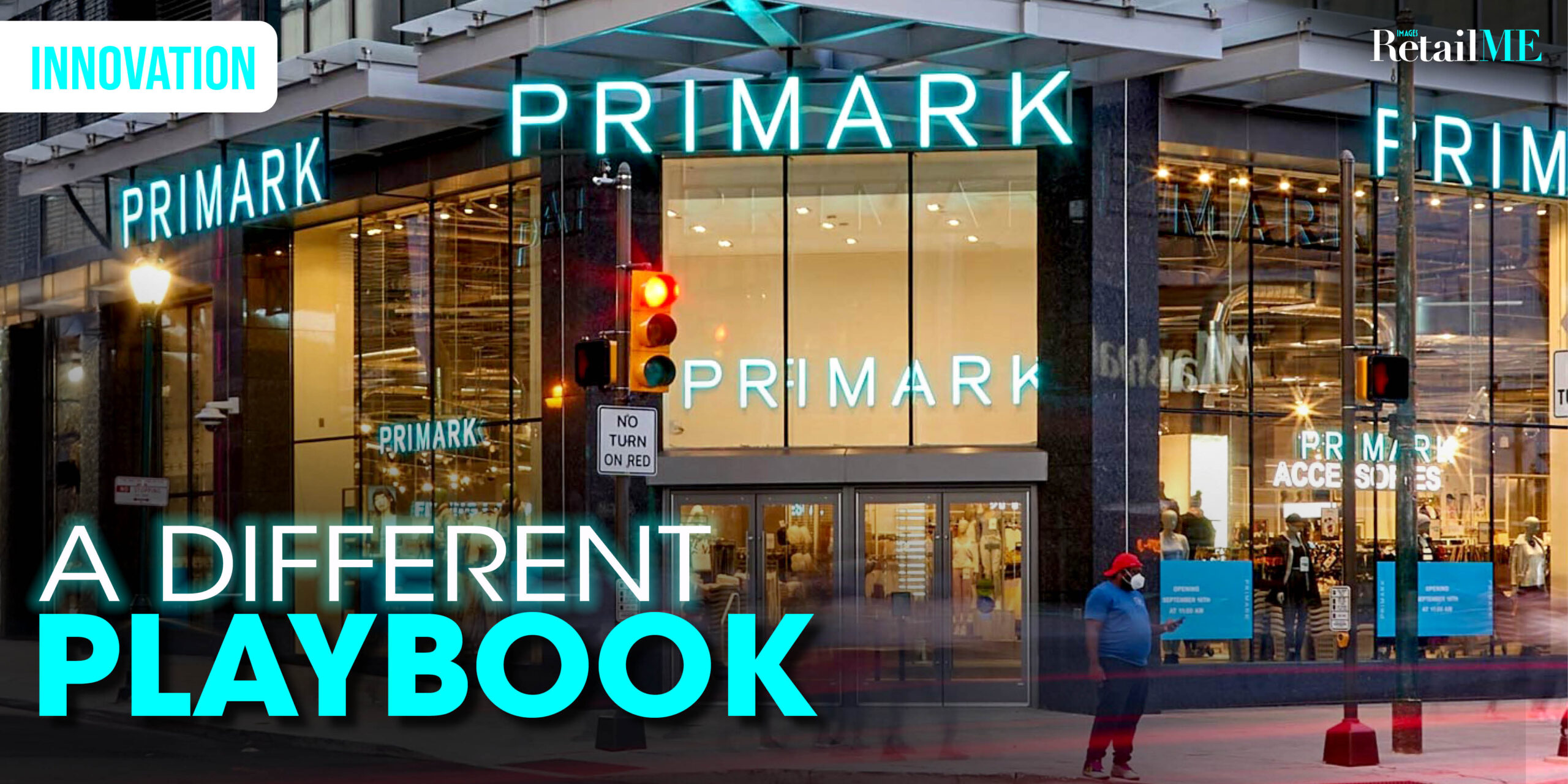
For years, Primark has challenged one of modern retail’s most entrenched assumptions: that digital transformation must mean full-scale e-commerce. In 2026, the brand’s Chicago flagship sharpens that position, showing that the next phase of physical retail is not about selling online, but about making stores work smarter.
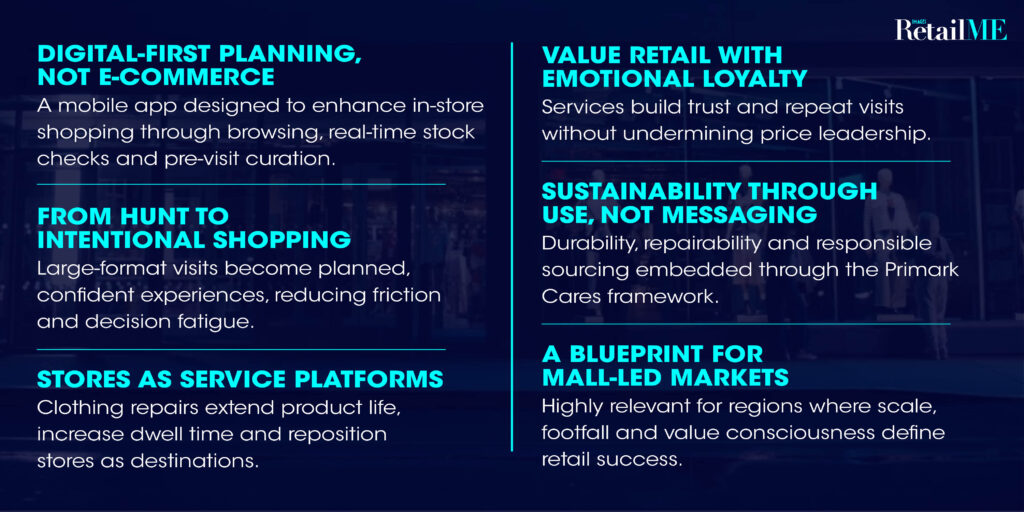
Rather than launching transactional e-commerce, Primark has invested in digital tools designed to improve the in-store journey. At the centre is a mobile app built to support physical shopping, not divert demand away from it. Customers can browse collections, check real-time store availability and save favourites before arriving. The goal is simple: reduce friction, improve confidence and turn store visits from reactive hunts into planned experiences.
For a brand that operates at massive scale and razor-thin margins, this is a deliberate and disciplined choice. In large urban flagships like Chicago, the app transforms complexity into clarity, helping shoppers navigate size, assortment and availability before they step inside.
Extending store value beyond transactions
Digital planning is complemented by a growing focus on in-store services, including clothing repairs. This is a subtle but strategic shift. By extending product life, Primark reframes its role from pure volume seller to long-term wardrobe partner.
Services increase dwell time, encourage repeat visits and build emotional loyalty, while remaining accessible to price-sensitive shoppers. The store becomes a place of value creation, not just value exchange.
These initiatives sit firmly within the Primark Cares framework, which is moving from intent to execution. Sustainability is embedded through better fabrics, more responsible sourcing and durability-led design, supported by services that keep garments in use for longer. It is not positioned as a premium upsell, but as a practical outcome of scale.
Crucially, Primark is proving that sustainability and value retail are not opposites. By focusing on durability, longevity and use, the brand is redefining what responsible fashion looks like at mass-market level.
Global benchmarks
Primark’s Chicago reset stands out because it avoids tech for tech’s sake. Instead of overinvesting in automation or cashier-less formats, the brand uses digital tools to solve real shopper problems: time, availability and decision confidence.
This makes the model highly relevant for markets like the Middle East, where large physical stores, mall-led retail and high footfall continue to dominate. Primark’s approach shows how retailers can use digital planning to drive store traffic, layer in services without heavy infrastructure costs, and balance affordability with sustainability in diverse, value-conscious markets.
Primark Chicago is not radical reinvention. It is smart evolution. By blending digital discipline, service-led retail and purpose built into operations, the brand offers a clear blueprint for how physical stores can stay relevant, profitable and human in 2026 and beyond.



Watsons to open 20 new stores in the GCC
In 2020, global health & beauty retailer AS Watson Group signed its
April 29, 2024 | By Rupkatha BAsda and Deliverect Deepen Partnership to Power Rapid Delivery Across Asda Express
SQUATWOLF’s Kuwait Flagship Store Anchors Its Regional Growth Ambitions
/ 
For decades, Haldiram’s built deep recall across the UAE through its packaged

When House of Habanero opened its first physical location at Alserkal Avenue

Union Coop has completed a significant expansion of its Hatta Souq branch,

Saudi Arabia is set to welcome U.S. food exporters this week, as

Majid Al Futtaim has officially entered the discount retail segment with the

As convenience increasingly becomes currency in the region’s grocery landscape, Union Coop

As wellness becomes a lifestyle in the UAE, the grocery aisle is

Grandiose, one of the leading grocery retailers in the UAE with a

With shifting consumer behaviour, rising cost pressures, regulatory changes, and rapid digitization,

Union Coop’s blend of retail expansion, digital innovation, and community focus is

Abu Dhabi-based MAIR Group has marked a pivotal stage in its transformation

In a move that blurs the line between shopping and investing, Apparel
/ 
In the race to reinvent physical retail, many concepts promise the future

As lives accelerate and time fragments, shoppers no longer separate “eating” from

“Luxury is no longer just about the product—it’s about the experience,” says

CION Lighting Technologies approaches innovation in a proactive and collaborative manner.

Marchon Eyewear, Inc., one of the world’s largest manufacturers and distributors of

This panel discussion at MRF 2024 explored the balance between digital-first brands

The short answer is, yes. The global personal luxury market seems to

An exciting collaboration between Emirates Outlet and Akinon promises to disrupt the

Pamela Opie, CEO & Founder of Linen Obsession, explains how the home

Just a few months back, Rabbit, the growing grocery e-commerce platform in





 Previous Article