


As the world races towards automation, the Martech Summit brought the focus back to what matters most: the human behind the screen. The session, moderated by Lubna Forzley, MA, PCC, Founder and CEO, Stories, explored how AI, automation, and analytics can enhance personalisation without sacrificing brand soul.
Structured across four chapters: Consumer Evolution, Creative Impact, Digital Frontiers, and Brand Mastery, the summit tackled urgent questions facing modern marketers. From shifting consumer behaviour to purpose-led storytelling and precision-driven campaigns, it provided a roadmap for brands aiming to stay human in a hyper-digital world.
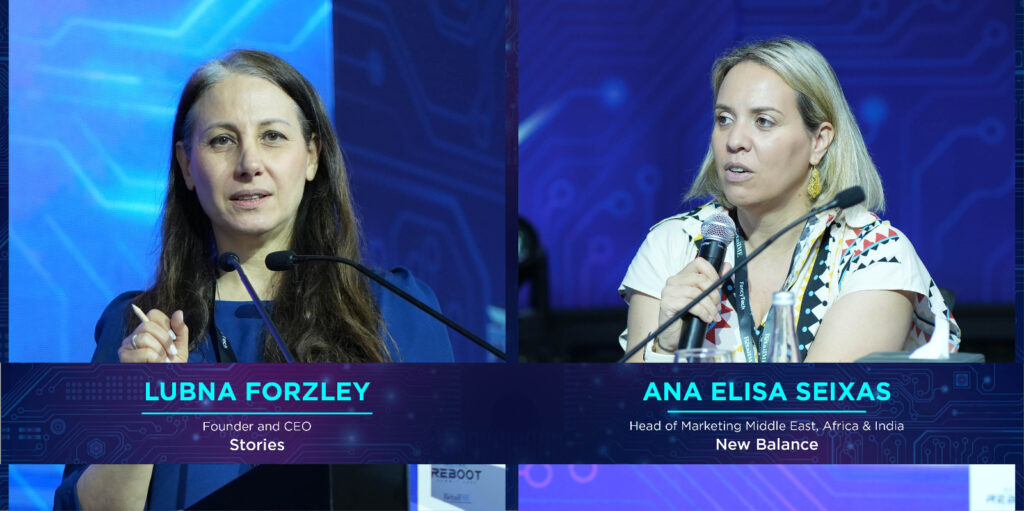
To begin, Lubna invited Ana Elisa Seixas, Head of Marketing for the Middle East, Africa & India, New Balance, to discuss how the brand adapts global messaging to local markets. For Ana, the word that defines this process is ‘localisation’ which often implies translating something that doesn’t quite translate, finding a way to make a global message resonate locally.
“For New Balance, this adaptation means connecting with communities on the ground, understanding their narratives, and building marketing strategies from that foundation. Global messaging has become more consistent than ever, so we need to place authentic conversations and how to meet consumers there,” Ana remarked.
She highlighted how New Balance’s Ramadan collection went beyond a seasonal gesture, authentically aligning with values of family and wellness. Similarly, their takeover of Jumeirah’s Concrete café merged sneaker culture with the local coffee scene.
“The goal wasn’t to create something ‘localised.’ It was to create something that felt local, rooted in the culture, not translated into it. And when it works, it often resonates globally too,” Ana stressed.
“At New Balance, it’s not just about how cool our products look, they’re also built for comfort and performance, with running technology embedded in our footwear and apparel. Ultimately, it’s about creating an emotional connection with consumers and being in the right place at the right time,” she concluded.
Bhavana Gupta, Head of Marketing & Communication, Royal Furniture Group, shared her views on creating sensory brand experiences in a digital world.
“Furniture is a tactile experience. But today, the consumer journey is increasingly digital, often starting and even ending online. We’re moving away from static images and embracing immersive tools like 360° photography and video. This lets consumers see how a fabric drapes, how it looks in different lighting, or even how it moves when touched, the kind of detail they’d get in a physical store.”
She emphasised authenticity: “We avoid showroom perfection. Instead, we design digital experiences that reflect real homes, sometimes messy, always lived-in. Through user-generated content and behind-the-scenes stories, we create relatable environments that consumers can connect with.”
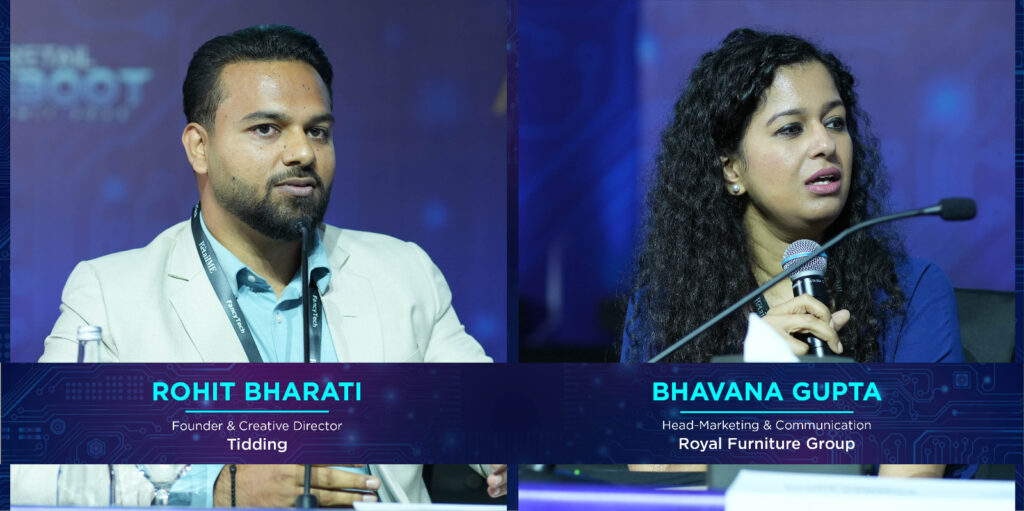
“If the content is good, it’ll work across platforms. But each platform has its own algorithm set, which decides how well your content performs,” said Rohit Bharati Creative Director, Tidding.
Expanding the conversation, Jack Xu, Director of Overseas Business at FancyTech, discussed balancing automation and creativity.
“Automation alone is like buying a treadmill and expecting abs, you still need creativity. At FancyTech, the team uses ‘branded AI,’ training the platform on each brand’s specific assets to maintain product integrity and visual coherence.”
He shared results: one client saw a 230% increase in output and a 60% reduction in production time. Automation and creativity can coexist—if applied with intention.
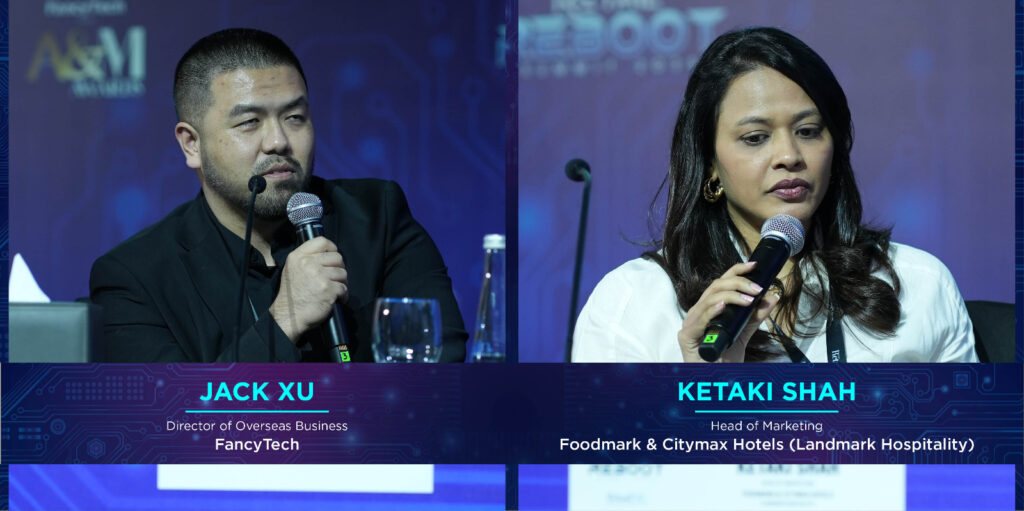
The discussion moved into omnichannel strategies. Ketaki Shah, Head of Marketing at Foodmark & Citymax Hotels (Landmark Group Hospitality), said, “We believe in a two-fold strategy: first, an omni-channel approach where the brand delivers a seamless and cohesive experience to the customer.”
She stressed the importance of consistency across platforms—menus, websites, and third-party apps—especially given the 60/40 or 70/30 dine-in to delivery splits in the region. “It is crucial to maintain brand standards, making sure logos are consistent, food looks identical, and messaging aligns across all platforms.”
Echoing the omnichannel theme, Marc Jeffrey, Chief Technology and Operations Officer, The Giving Movement, shared how technology drives loyalty.
“We launched online during a time of huge hype, but faced challenges like shifting algorithms, and rising marketing costs. To adapt, we expanded into retail, from one store to 12 across the GCC,” he said. “At the heart of our strategy is emotional connection. So we focus on purpose-driven storytelling, with an in-house content team crafting tailored messages, and a product experience rooted in comfort, quality, and sustainability.”
Marc elaborated on their in-house tech stack. “We’ve built our own system that integrates online and offline data. So when a customer walks into a store, we know what they’ve bought, what they like, even their kids’ sizes. Today, 35% of our customer base shops across both channels.”
Despite tech’s role, in-store experiences remain personal. The app and site are designed for speed and ease, but connection is key.
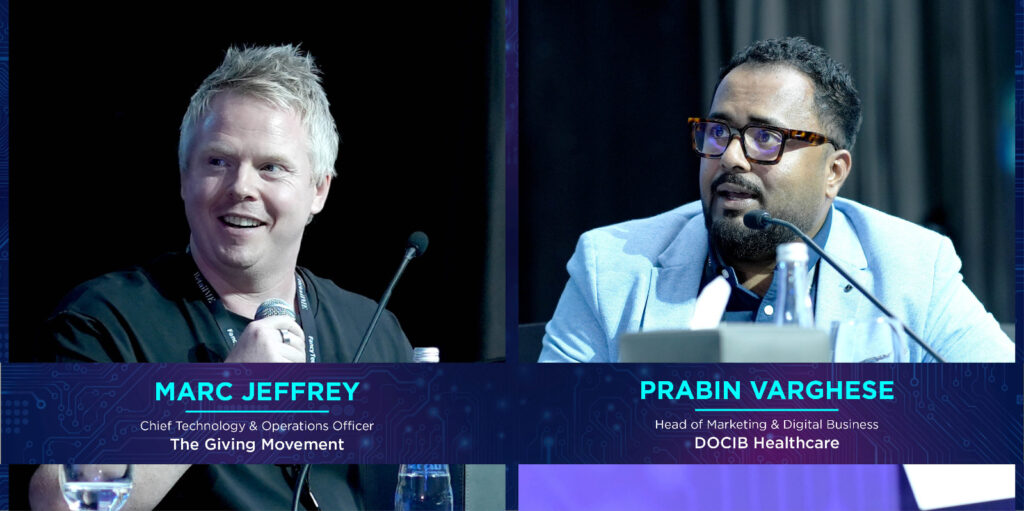
Prabin Varghese, Head of Marketing & Digital Business at DOCIB Pharmacies & Clinics, examined shifts in consumer behaviour within pharmacy retail. Visits are no longer just prescription-driven, they’re wellness-driven.
“Today’s consumers are more educated and proactive,” he said, crediting campaigns like the Dubai Fitness Challenge. To meet these needs, DOCIB retrained pharmacists, redesigned stores around wellness, and leaned into brand purpose: not just being a pharmacy, but a wellness destination.
Pharmacists have become trusted advisors in this evolving space, knowledgeable, empathetic, and customer-facing.
Syed Ameer, Brand Lead, FNP, spoke about creating emotional consistency in an impulse-driven category.
“We are an emotion and impulse driven category,” Syed explained. FNP has shifted from being purely occasion-driven to an everyday emotional brand. “It doesn’t matter what it is, it can be a gratitude towards somebody or you want to just say that okay let’s stay connected.”
He shared how AI is delivering ROI beyond hype. “FNP launched personalised products around the trending ‘Ghibli’ concept, where all products were created by AI, with the same images fed into another AI system to generate showcase videos. We have a run rate of 50 orders a day from those products. This helps scale execution at a fraction of the cost.”
Consistency remains central. Tone, visuals, and purpose adapt per occasion and market, but always feel cohesive.
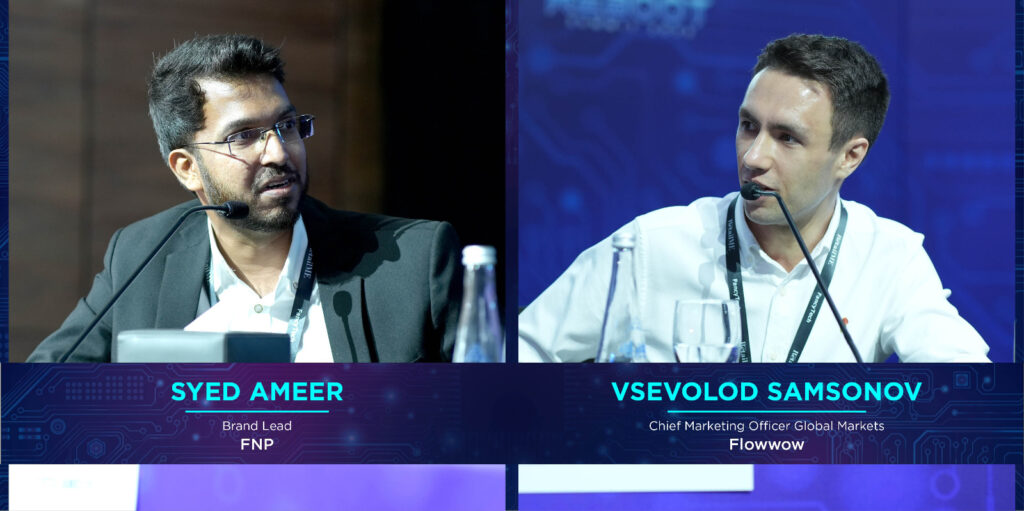
Vsevolod Samsonov, CMO of Global Markets, Flowwow, addressed cultural nuance across 40+ countries. “In Spain, people tend to be a bit more traditional and not very digitally savvy, so we need to teach them how to use our app. In the UAE it’s an absolutely different dynamic because people are digital first.”
Still, one truth stands: “There are people everywhere and people have emotions and people have happiness from each gift. So as long as love exists our business and our market will strive.”
Returning to New Balance, Ana addressed how heritage brands resonate with younger, fashion-forward consumers. Through an audience poll on running and brand awareness, she spotlighted a generational shift.
“Interestingly enough they are now really into running. In my generation, a lot of us saw exercise and movement as sacrifice. Nowadays, the younger consumers see exercise as part of their lifestyle.”
This shift inspired community-building like running clubs and regional ambassadors. “Amy Roko, a hijabi woman from Saudi Arabia who loves doing comedy and singing, eventually ran her first 5K at the Doha Marathon. We brought her along not just from the cultural and lifestyle journey, but into the performance journey as well,” Ana shared.
When asked about the future, the panel aligned on one message: Human connection is irreplaceable.
Ana predicted a resurgence in brand activations and physical events. “People crave human connection,” she said. Brands must design ways to encourage real-world engagement.
Bhavana elaborated on evolving personalisation, “When you talk to consumers, make them feel that you know them. Make them feel that we understand you and we’re trying to help you solve a problem for which you’re looking for a solution.”
She offered a clear example, “A young couple may be looking for something compact and trendy, while a family of five wants comfort and durability. Same product category, different messaging.” The key is using data to understand not just what the customer wants, but why and to curate accordingly.
Lubna circled back to Jack to explore how AI-trained models help brands scale this kind of precision. Jack shared two use cases.
The first: a beauty brand overwhelmed by SKUs and deadlines. Branded AI generated content aligned to tone, guidelines, and visual language—fast and consistently.
The second: automated A/B testing at scale. “Each demographic requires a different narrative,” Jack said. “It’s not just about efficiency. It’s about elevating the creative baseline while saving time.”
Ketaki added a grounding perspective, “There’s no single tool,” she said. “The tool is relevance.” She challenged the audience with a quick poll: “How many of you go to McDonald’s because you crave it? And how many go because the app reminded you?” Most picked the latter—proof that contextual nudges shape behaviour. But relevance must be hyper-local. “A promo that works in Barsha may flop in Bur Dubai. That’s why we test, adapt, and execute based on location-specific insights.”
Marc Jeffrey offered a personal reflection on tech overload. “We’re surrounded by tech. It’s useful, but also exhausting. I’ve deleted most of my social media. We need to draw the line and let tech power work, not run our lives.”
He added, “People will gravitate to brands they can connect with emotionally. If you’re authentic, if you stand for something, consumers will stay with you.”
Prabin returned to the purpose-led theme, “We’re moving from prescription to prevention. During COVID, everyone stocked vitamin C. Now, few remember why.” Wellness branding needs to empower, not sell and educate consumers to build long-term trust.
Rohit shared digital-era content lessons, “The three things that I would suggest is to stay consistent, post as and when the algorithm wants you to. Second is to stay on top of trends, which means being part of the flow, and staying relevant. And the last one is to stay authentic. The core audience comes to you for original content,” he said.
As the summit drew to a close, Syed offered a look ahead, “I see smart commerce coming in where AI will understand people and why they act in certain ways rather than knowing what they’re doing as a data point. This will help personalise products and know customers better.”
Ultimately, one idea rang loudest in the panel, which is, AI might predict our needs, but only human connection fulfills them. At the intersection of innovation and intuition lies the marketer’s true north.



Watsons to open 20 new stores in the GCC
In 2020, global health & beauty retailer AS Watson Group signed its
April 29, 2024 | By Rupkatha BAsda and Deliverect Deepen Partnership to Power Rapid Delivery Across Asda Express
SQUATWOLF’s Kuwait Flagship Store Anchors Its Regional Growth Ambitions
/ 
For decades, Haldiram’s built deep recall across the UAE through its packaged

When House of Habanero opened its first physical location at Alserkal Avenue

Union Coop has completed a significant expansion of its Hatta Souq branch,

Saudi Arabia is set to welcome U.S. food exporters this week, as

Majid Al Futtaim has officially entered the discount retail segment with the

As convenience increasingly becomes currency in the region’s grocery landscape, Union Coop

As wellness becomes a lifestyle in the UAE, the grocery aisle is

Grandiose, one of the leading grocery retailers in the UAE with a

With shifting consumer behaviour, rising cost pressures, regulatory changes, and rapid digitization,

Union Coop’s blend of retail expansion, digital innovation, and community focus is

Abu Dhabi-based MAIR Group has marked a pivotal stage in its transformation

In a move that blurs the line between shopping and investing, Apparel
/ 
Asda, the UK’s third-largest grocery retailer, has strengthened its partnership with Deliverect

In today’s retail landscape, the convergence of vision and execution assures continued

At the AI Roundtable, technology heads, marketers, and leaders explored how AI

From frictionless checkouts to AI-powered inventory, retail’s digital backbone took center stage

Pathfinder’s GenAI platform RetailGPT is built to bridge digital and physical retail.

In an exclusive interview with IMAGES RetailME, Driss Iziki, MEA Operations Director

By harnessing the power of artificial intelligence (AI), data and digital innovation,

In an era where digital transformation is pivotal, shopping malls are not

This panel discussion at MRF 2024 explored the balance between digital-first brands

At MRF 2024, Zebra Technologies showcased their AI-powered ‘store of the future’,

This session at MRF 2024 focused on the pivotal role of omnichannel





 Previous Article