

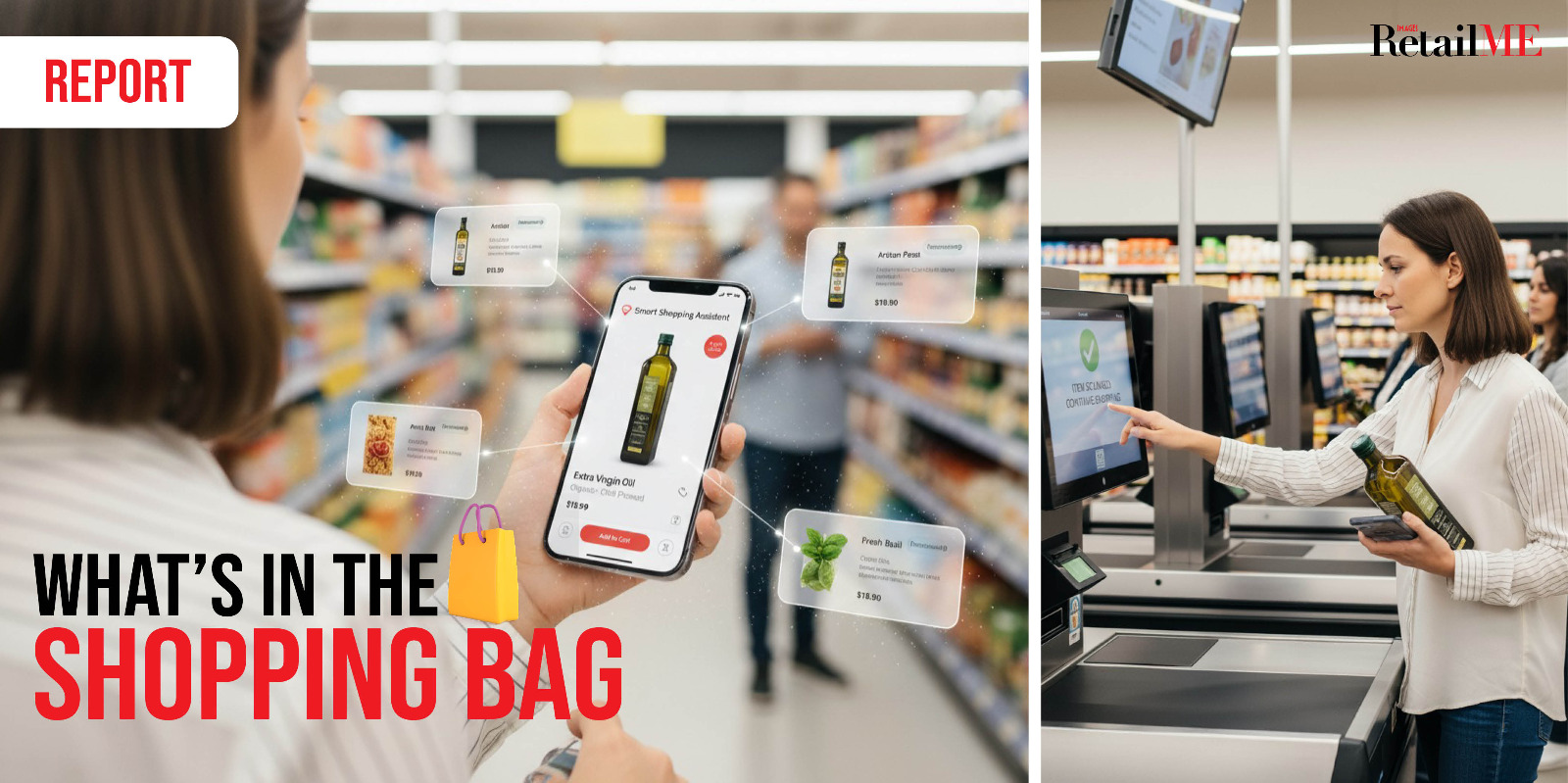
When it comes to global retail transformation, the frontline is becoming the most important place where technology meets the customer. Across markets, retailers are navigating shrinking shopper patience, persistent inventory gaps, and a new pace of digital expectation. Zebra Technologies’ 18th Annual Global Shopper Study—surveying over 4,200 shoppers, associates, and retail leaders across North America, Latin America, Europe, and Asia-Pacific—offers a powerful lens into what’s changing, what matters, and what smart retailers must act on next.
And the findings point to one truth: AI, automation, and intelligent workflows are now core to retail competitiveness.
“Dubai Is the World’s Shop Window” — The Middle East Context
Opening the conversation from a regional lens, Hozefa Saylawala, Director, Middle East, Zebra Technologies, captures the momentum succinctly:
“Dubai is the world’s shop window and the retail sector is critical to the UAE economy and its prosperity, supporting thousands of jobs and the tourism sector. The country is also a major adopter of new technologies such as AI, which can play such a crucial role in the shopper experience. Zebra Technologies focuses on the connected frontline, making staff—such as retail store associates—more productive by integrating AI seamlessly into their daily routines, streamlining processes and reducing complexity. By enabling frontline teams to work more efficiently and effectively, AI frees up valuable time so they can concentrate on what matters most: delivering exceptional service to customers.”
“Retailers are already piloting AI to address critical areas like loss prevention, risk detection, and inventory. This vision is central to Zebra’s strategy – AI as a companion and enhancement tool. The question now for retailers isn’t why they should use AI; it’s how they should use it to make their operations better every day.”
Across the UAE and wider Middle East, where innovation adoption cycles are faster than in many global markets, this frontline-first approach is already visible—from RFID expansions to AI-powered inventory and workforce tools.
Gen AI Takes Center Stage in Loss Prevention
Shrink continues to undermine profitability globally, and retailers are turning to intelligent automation to close the gap.
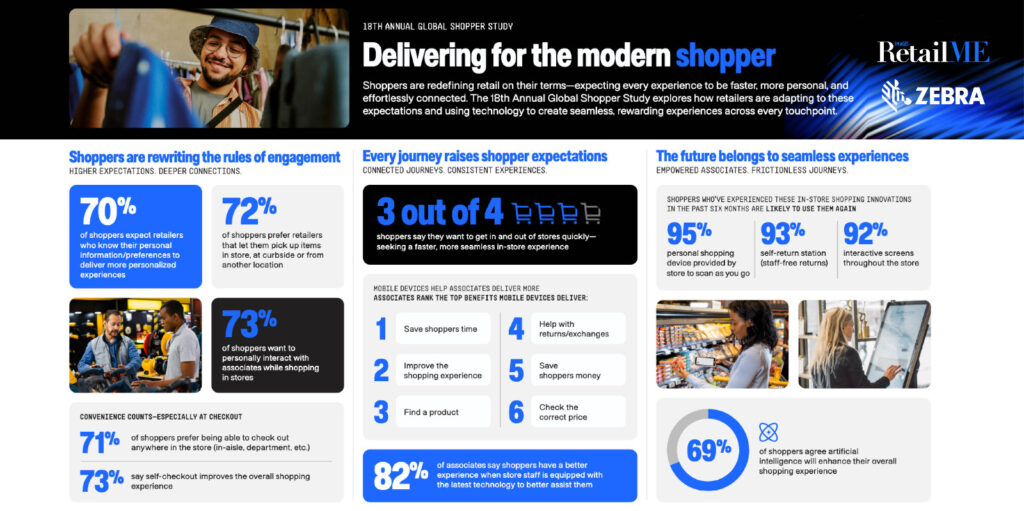
Zebra’s study reveals:
AI is becoming the new “control tower” for risk detection, enabling retailers to spot anomalies faster, manage high-theft categories more intelligently, and reduce friction for genuine customers.
Matthew Guiste, Global Retail Technology Strategist at Zebra, reinforces the point:
“Retail’s future belongs to those who connect the physical and digital worlds through intelligent workflows.”
“With AI, automation, and improved workflows, retailers can reduce loss and deliver the fast, seamless, and personalised experiences that today’s shoppers demand.”
Shopper Satisfaction: A Tale of Two Journeys
The study paints a mixed picture of shopper sentiment:
What shoppers want today is clear:
speed, convenience, real-time information, and reliable stock availability.
Their biggest pain points reinforce this:
Retailers who fix “the basics”—inventory, information access, and checkout speed—stand to win trust and loyalty.
The Frontline Needs Tech — and Expects It
Retail associates are under growing pressure to deliver faster answers and better service—yet many still lack real-time tools.
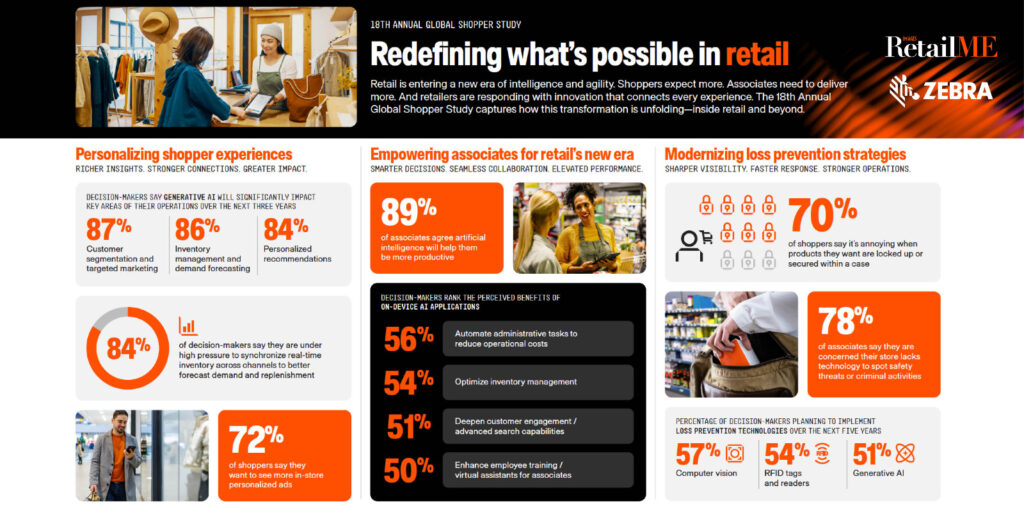
Zebra’s study shows:
This reinforces a rising truth in retail:
empowered employees = happier customers.
The frontline is no longer just a functional layer—it is the engine of customer experience. And the technology they use directly shapes shopper loyalty.
Inventory Visibility: The Most Critical Battleground
More than half of shoppers globally still leave stores without all the items they intend to purchase. The financial impact is significant, pushing retailers to prioritise real-time inventory intelligence.
Key findings:
The recent joint study by Zebra and Oxford Economics reinforces this:
Improved inventory workflows can boost revenue growth and profitability by up to 1.8 percentage points. Inventory is no longer a supply chain function. It is a profit driver.
Where Profitability Will Come From Next
The study reveals a clear shift in leadership priorities:
Zebra’s recent acquisition of Elo—a leader in interactive displays—supports this strategy by enabling in-store digital engagement and retail media monetisation.
Zebra’s Next-Gen Tools Powering the Connected Frontline
Zebra continues to expand its retail portfolio with solutions that enhance visibility, speed, and productivity:
These devices close critical gaps: product location, collaboration, task completion, customer lookup, and stock updates—creating an “intelligent retail floor.”
Regional Highlights in Focus
The patterns are clear: despite regional nuances, inventory, information access, and AI-driven workflows are universal priorities.
Conclusion: The Future of Retail Is Intelligent, Connected, and Frontline-First
Retailers today face the dual challenge of elevated shopper expectations and operational complexity. Zebra’s Global Shopper Study reaffirms that success depends on:
As Hozefa Saylawala emphasises, the question is no longer “why AI?”
It is “how do we use AI to make retail better every single day?” Retailers who answer this with conviction—backed by intelligent tools, stronger frontline support, and seamless workflows—are the ones who will lead the next era of global retail.



Watsons to open 20 new stores in the GCC
In 2020, global health & beauty retailer AS Watson Group signed its
April 29, 2024 | By Rupkatha BAsda and Deliverect Deepen Partnership to Power Rapid Delivery Across Asda Express
SQUATWOLF’s Kuwait Flagship Store Anchors Its Regional Growth Ambitions
/ 
For decades, Haldiram’s built deep recall across the UAE through its packaged

When House of Habanero opened its first physical location at Alserkal Avenue

Union Coop has completed a significant expansion of its Hatta Souq branch,

Saudi Arabia is set to welcome U.S. food exporters this week, as

Majid Al Futtaim has officially entered the discount retail segment with the

As convenience increasingly becomes currency in the region’s grocery landscape, Union Coop

As wellness becomes a lifestyle in the UAE, the grocery aisle is

Grandiose, one of the leading grocery retailers in the UAE with a

With shifting consumer behaviour, rising cost pressures, regulatory changes, and rapid digitization,

Union Coop’s blend of retail expansion, digital innovation, and community focus is

Abu Dhabi-based MAIR Group has marked a pivotal stage in its transformation

In a move that blurs the line between shopping and investing, Apparel
/ 
“Luxury is no longer just about the product—it’s about the experience,” says





 Previous Article