
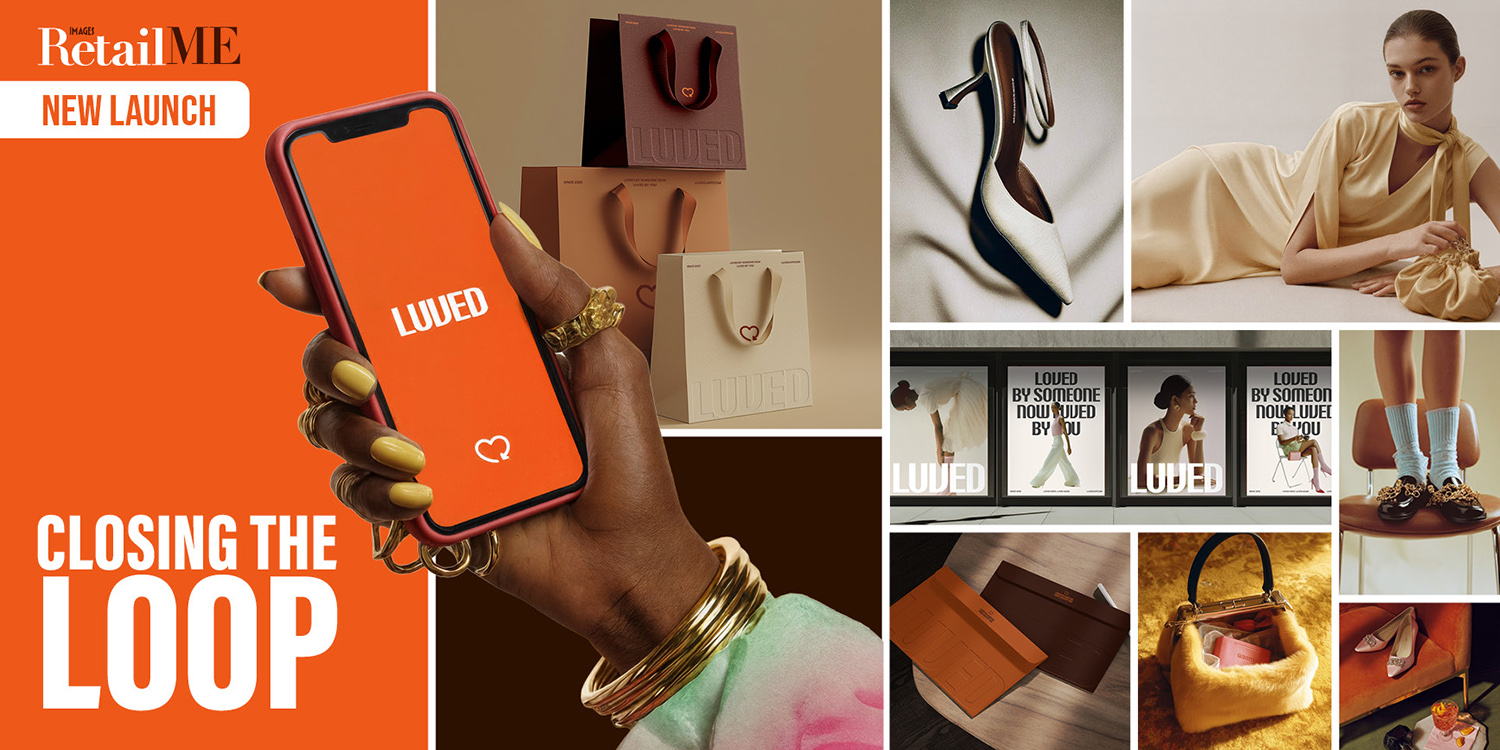
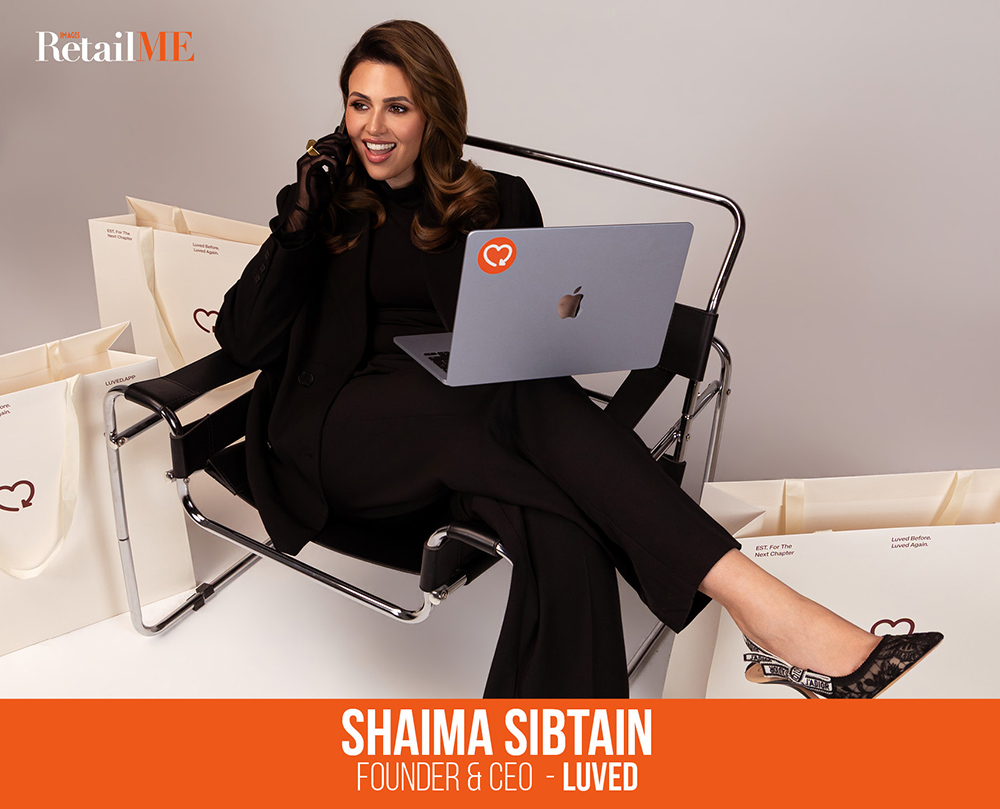
One week into launch, we caught up with founder Shaima Sibtain as she reflected on the dream that started it, building a four-person startup from a list of 20 ideas, and why she’s in no rush to grow fast.
Shaima Sibtain didn’t set out to build a tech company. She set out to give away her toddler’s old clothes — and ran into so much friction doing it that she ended up building the platform she wished existed. Luved, a pre-loved marketplace that launched in the UAE just one week before this conversation, is the result: a digital-only space where people sell, gift and buy second-hand fashion and goods, with AI-assisted pricing, escrow-backed luxury authentication, and a deliberately slow, community-first growth strategy. We spoke to her about the journey from a holiday dream to a live app.
Let’s start at the beginning. How did the idea for Luved come to you? And the name — it’s lovely.
Thank you. The name actually came really naturally. I didn’t write a list of names or anything; it just arrived with the idea. It sounds strange, but I’d been living in Dubai for about two years, and I was on holiday when I woke up from a dream that I’d built a pre-loved marketplace app — which is very odd, because I’d never built a tech startup before.
The subconscious is fascinating. In London, I’d been selling on Vinted and Vestiaire and giving things away on Olio. Then I moved to Dubai with a one-and-a-half-year-old and tried to give away his baby things. I went to six different places that supposedly had donation bins, and there was no bin. I eventually found Thrift for Good, who took the baby stuff for free, and I thought — this is such lovely stuff, why is it so hard to give away? I posted in WhatsApp groups and got nothing back; within seconds my listing had vanished under everyone else’s posts.
It shouldn’t be this difficult, because I know for a fact people need these things. So really it was about removing that friction. And at the time, nobody in the region was doing anything like this. I thought, if not me, then who? If others come along and do it too, that’s great — we can all help build the UAE into a circular economy. Our differentiation would be that we are one of the first people to add an element of giving back
There was a moment that crystallised it. My husband and I were in Dubai and bought some outdoor furniture from a woman nearby through a Facebook group. We were at her house wrestling a sofa into the car, handing over 200 dirhams in cash, and I thought — this feels so archaic. We live in the 21st century, in a city that’s advanced in so many ways, and this just doesn’t match up. So I decided I wasn’t going to wait for someone else to fix it. I’m the target customer too. I wanted something genuinely easy to use that encourages people to give and sell.
On the practical side — funding, the right people, the technology — what did you have to negotiate to get this off the ground?
The first challenge was simply: where do I start? I’ve started businesses before, but those were always far more considered. About a year after I moved here, I’d actually sat down and written a list of 20 different business ideas — and this wasn’t on it. It came out of nowhere.
The biggest challenge wasn’t funding. It was figuring out where to begin. The first phase was turning an idea into a product, a brand and a clear strategy. We began with competitive analysis and intensive brand workshops. We asked ourselves fundamental questions: Who are we? What do we stand for? What should people feel when they use Luved?
One word kept surfacing: curated.
We built the MVP with an agency in Poland and developed everything from the visual identity to the user journey. Once the foundation was in place, I brought development in-house. Our Head of Product, Maryam, had experience with Deloitte and Accenture and happened to be exploring a similar idea in the children’s resale space. The timing was perfect. So, a simple conversation regarding our observations brought us together and since then, she’s been instrumental in building the product and leading the engineering team.
Today we’re still a four-person team. That’s startup life. Everyone wears multiple hats. I was doing deliveries myself this morning. While I probably should have been behind my desk, meeting users face-to-face and hearing their feedback firsthand is one of the most valuable things I can do as a founder.
And the customer response so far?
It’s been encouraging. Most of the activity so far has been driven by our free offering. If a seller enables in-person collection, the transaction can happen completely free of charge.
At the same time, many people prefer convenience and privacy. They don’t necessarily want to arrange meetings with strangers or share personal information. That’s where Luved adds value. Addresses remain protected, and users can choose delivery instead. For those transactions, we charge a minimal fee.
The response tells us we’re solving a genuine problem. People want a simpler, safer and more convenient way to participate in resale.,
What’s the business model in the long run?
Right now we’re minimising our margin to maximise growth — a bit like the Facebook approach of taking some pain early to monetise later. We charge a 10% buyer protection fee, which gives buyers full security: refunds, partial refunds, customer support, and dispute resolution if a buyer and seller can’t agree on an item. We also make a small margin on authentication and delivery. It’s very minimal, because it’s really an app for the people.
The bigger objective is building a trusted ecosystem around circular consumption. Consumers today are increasingly open to pre-loved shopping, particularly when the experience is convenient and reliable. Every item has a story. Whether it’s a vintage handbag or a child’s outgrown wardrobe, extending its life creates value both economically and environmentally.
Ultimately, convenience drives behaviour. If selling or donating something is easier than throwing it away, people are far more likely to participate.
Was competition ever on your mind? There’s an existing pre-loved market in the UAE.
We’re very much in our own lane. I’m almost glad others are coming out with similar ideas, because it validates what the market is demanding right now. But in terms of the actual product, we’re entirely in our own vision.
The biggest challenge isn’t competition — it’s the emotional hurdle of buying pre-loved. That’s something Luved and everyone else in the market has to consciously work on: growing the mentality that it’s okay to wear pre-loved, that you don’t need to be shy or embarrassed about it. Just because an item has had a life before doesn’t mean you can’t represent it proudly. With pre-loved things there can be defects, but as long as you’re transparent, it’s fine.
Do you see yourself moving into physical space at some point — a pop-up, a warehouse, a drop-off zone? Or do you want to stay agile?
Not at the moment. We’re deliberately asset-light. We don’t want to hold inventory or operate warehouses. The control should remain with the seller.
If you own a handbag and decide to list it today, it’s still yours until the moment it’s sold. You can continue using it, decide on pricing and negotiate directly with buyers. Our role is to provide the infrastructure, trust and convenience that make the transaction seamless. That model keeps the platform efficient while giving users maximum flexibility.
If a seller is clueless about pricing — a vintage or luxury piece, say — can they come to you for help getting it right?
I’m so glad you asked. Alongside AI autofill, we have an AI price suggestion at the bottom of every listing page. Depending on the item and its condition, the AI suggests a price automatically — it’s predictive, and it really helps.
There’s one more feature I’m excited about. We’ve partnered with Entrupy on AI-Luxury authentication.
For selected handbag categories, authentication becomes a mandatory step before funds are released. The item goes through a structured verification process and receives a digital certificate. Once the buyer receives it, fingerprint technology confirms it’s the same product that was authenticated. Trust is everything in resale, particularly in luxury. The goal is to remove uncertainty for both buyers and sellers.
What about marketing? It’s a new launch — beyond word of mouth, how do you plan to grow?
We have a fairly modest strategy at the moment. When I was growing up and Vinted came out, everyone started using it through word of mouth. When you have a good experience, you tell your friends. So we don’t want to grow like crazy right now — we want good, genuine people and good listings, and to build an amazing community organically and slowly.
Our first three-month strategy is to keep our ear to the ground: what do people want, what are they liking, so we can test and feel how they’re reacting. There’s a difference between my vision as a founder and what buyers and sellers actually tell you, and if you grow too fast it’s very hard to tune into that. We’re doing things on social media and some collaborations, but it’s not pushed to the max. It’s more important that everyone who signs up wants to stay. So for now, we’re filtering out listings that aren’t suitable — we’ve had cot mattresses and things that aren’t aligned with the app’s ethos yet, until we open that category, hopefully in about six months. Keeping the quality of the community high matters far more right now than getting everybody and anybody to sign up.
Finally — by the end of 2026, going into 2027, what do you want to have achieved with Luved?
I’m not even thinking two years out — I’m thinking very immediate. We have an exciting feature called the LUVBOT rolling out soon. It’ll guide people in-app: if a listing isn’t selling, it’ll nudge them — maybe change the cover photo, maybe lower the price — and assist with any concerns they have. I have about a hundred features I want to roll out, and my head of product keeps reminding me to do one thing at a time.
The app you see today, which I’m very proud of, is going to be hugely developed. This is our bare-minimum starting point — we wanted to get live as quickly as we could with the basic functionality so you can complete a transaction end to end. But all the sparkly bits are coming. We’ll have gamification — a leaderboard for who’s gifting the most. We’re bringing the app into Arabic, so from the home page you can choose Arabic or English; we already have chat translation, so you can write a message in Arabic and have it translate to English or vice versa. And we’ll be introducing home, which will be a really big,


Watsons to open 20 new stores in the GCC
In 2020, global health & beauty retailer AS Watson Group signed its
April 29, 2024 | By Rupkatha BSedar Global: 134 Years of Crafting Spaces, Now Reimagining the Future
From Shelf to Storefront: Why Haldiram’s Is Betting Bigger on Dubai
/ 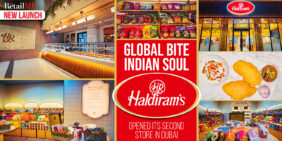
For decades, Haldiram’s built deep recall across the UAE through its packaged
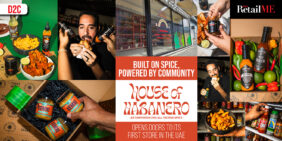
When House of Habanero opened its first physical location at Alserkal Avenue

Union Coop has completed a significant expansion of its Hatta Souq branch,

Saudi Arabia is set to welcome U.S. food exporters this week, as

Majid Al Futtaim has officially entered the discount retail segment with the

As convenience increasingly becomes currency in the region’s grocery landscape, Union Coop

As wellness becomes a lifestyle in the UAE, the grocery aisle is

Grandiose, one of the leading grocery retailers in the UAE with a

With shifting consumer behaviour, rising cost pressures, regulatory changes, and rapid digitization,

Union Coop’s blend of retail expansion, digital innovation, and community focus is

Abu Dhabi-based MAIR Group has marked a pivotal stage in its transformation

In a move that blurs the line between shopping and investing, Apparel
/ 
In a retail landscape dominated by shelves stacked with finished products, Oo
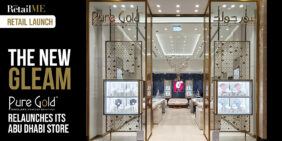
Pure Gold Jewellers, one of the region’s leading jewellery retail brands, today

Ulta Beauty’s arrival in the Middle East is not simply another international

European denim powerhouse JACK & JONES is making a decisive return to

From bullion to boutiques, investment to immersion, Dubai Gold District marks a
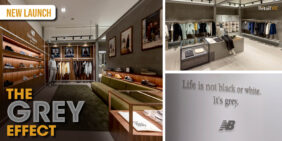
The opening of New Balance’s first-ever Grey store in the Middle East

LOJEL, the global brand celebrated for its design-forward luggage and everyday carry
As youth culture reshapes the global retail playbook, Majid Al Futtaim is
Majid Al Futtaim is strengthening its lifestyle portfolio with a move into





 Previous Article